Author: hezemon_admin

  • The Science of First Impressions: How to Craft a Memorable Brand Identity

    The Science of First Impressions: How to Craft a Memorable Brand Identity

    In today’s competitive market, your brand identity is more than a logo or tagline. It’s your brand’s first handshake, your elevator pitch, and your trust signal — all rolled into one.

    Research shows it takes just 50 milliseconds for someone to form an impression. That’s why first impression branding is critical if you want your business to stand out and stay memorable.

    From logos and color palettes to tone and visuals, every element of your brand identity affects how people perceive you. When done right, it strengthens brand recognition, improves engagement, and increases conversions.

    Let’s explore how to build a brand identity that leaves a lasting impact.

    Grow Business

    Why First Impressions Matter in Branding

    Whether a customer lands on your website, social media page, or email — they judge your brand identity almost instantly.

    This quick judgment determines whether they’ll trust you, remember you, or ignore you completely.

    First impression branding is not just about good looks. It’s about creating an emotional connection and building credibility fast. That’s why your design, tone, and layout should speak clearly — in just a few seconds.

    When this works well, it leads to one powerful result: stronger brand recognition.

    5 Core Elements of a Strong Brand Identity

    Creating a strong brand identity involves blending design and strategy. Below are five key components every brand should get right.

    1. Logo Impact: Your Visual Signature

    Your logo is your most visible and memorable asset. It needs to be:

    • Simple and symbolic

    • Easily recognizable

    • Emotionally engaging

    A powerful logo reflects your brand personality and builds trust in seconds. Think of Nike’s swoosh or McDonald’s golden arches — the logo impact is instant.

    Digital Marketing Services

    2. Color Psychology: Emotion in Every Hue

    Colors trigger emotions. Blue suggests trust. Red creates urgency. Green feels natural and calming.

    To make your colors work:

    • Choose 1–2 primary brand colors

    • Use supporting shades strategically

    • Align your palette with your values

    This boosts your first impression branding and supports brand recognition through visual memory.

    3. Typography: Your Visual Tone of Voice

    Fonts express your brand’s voice. A serif font feels professional. A handwritten font feels friendly and informal.

    Brand design tip:
    Use a maximum of 2–3 font families. Keep them consistent across websites, brochures, ads, and presentations. This reinforces your brand identity.

    Microsoft Office 365 Reseller

    4. Visual Storytelling: Show What You Stand For

    Images, layouts, and icons all contribute to your message — even before the visitor reads a word.

    Use visuals to:

    • Tell your brand story

    • Reflect customer aspirations

    • Highlight your transformation journey

    Good visuals make first impression branding more relatable and memorable.

    5. Consistency: The Secret to Brand Recognition

    Consistency builds familiarity. It makes your brand feel reliable and professional.

    To be consistent, align:

    • Logo usage

    • Fonts and colors

    • Voice and tone

    • Content structure

    If your brand identity lacks consistency, it weakens trust. But when done right, it accelerates long-term brand recognition.

    Psychology Behind First Impressions

    In milliseconds, people evaluate two main traits:

    • Warmth (friendly, approachable)

    • Competence (professional, trustworthy)

    Your first impression branding should communicate both.

    Warmth comes from conversational language and human-focused visuals. Competence comes from clean design, bold fonts, and structured messaging.

    Together, they make your brand identity both memorable and credible.

    Quick Brand Design Tips

    Want to level up your branding? Start with these tips:

    • Define your strategy: Know your audience, mission, and values.

    • Audit your competitors: Find opportunities to differentiate.

    • Create a brand guide: Keep design and messaging consistent.

    • Test and iterate: Run A/B tests on logos, layouts, and messages.

    • Lead with emotion: People connect with stories more than specs.

    Every decision — from font weight to button color — shapes your brand identity.

    Final Thoughts: First Impressions Count

    Your brand identity isn’t just how you look — it’s how you’re remembered.

    In a fast-scrolling world, first impression branding gives you a chance to stop the scroll, capture attention, and build trust instantly.

    By focusing on emotional clarity, visual cohesion, and consistent execution, you create a brand that resonates and earns loyalty.

    The result? Stronger brand recognition that lasts.

  • From Clicks to Clients: How We Scaled ROI by 3X Using Full-Funnel Campaigns

    From Clicks to Clients: How We Scaled ROI by 3X Using Full-Funnel Campaigns

    Introduction: From Clicks to Clients

    In the world of digital marketing, getting clicks is easy. But converting those clicks into loyal, paying clients? That’s where the real challenge lies.

    In this digital marketing case study, we take you behind the scenes of how Way2Connect Solutions helped a mid-sized B2B SaaS company scale their ROI by 3X — not with more budget, but with a smart full-funnel strategy. This is a story of transformation, built on actionable insights, data, and marketing that speaks to the entire buyer journey.

    The Problem: Lots of Clicks, No Conversions

    When this client first approached us, they were doing all the right things — or so it seemed.

    They were running Google Ads. They had decent organic traffic. Their social media presence was active. But despite high click-through rates and growing impressions, conversions were stagnating.

    Their key issues?

    • Leads were dropping off mid-funnel.
    • There was no structured nurturing process.
    • Sales blamed marketing. Marketing blamed the funnel.

    It was the classic case of what we call “leaky funnel syndrome” — great traffic but poor results. This digital marketing case study truly began when we asked one simple question:

    Are we building campaigns for people… or just platforms?

    Our Turning Point: Building a Full-Funnel Strategy

    The breakthrough came when we shifted focus from top-of-funnel clicks to end-to-end buyer journeys. Our team rebuilt their approach around a full-funnel strategy — a methodology that aligns content, ads, emails, and automation across all three funnel stages:

    1. Top-of-Funnel (TOFU): Awareness & Discovery
    2. Middle-of-Funnel (MOFU): Consideration & Evaluation
    3. Bottom-of-Funnel (BOFU): Decision & Conversion

    We tailored messaging, CTAs, and channels for each stage. No more one-size-fits-all campaigns. No more forcing cold leads into hot sales pitches. This shift was the heartbeat of our ROI-driven marketing playbook.

    Execution: Inside the ROI-Driven Marketing Plan

    Here’s a look at the tactical breakdown of our ROI-driven marketing execution:

    TOFU (Attract Stage)

    • Goal: Drive quality traffic
    • Tactics: Educational blog posts, explainer videos, infographics
    • Channels: SEO, LinkedIn ads, Twitter threads
    • Content Angle: “Here’s a problem you didn’t know you had”

    We used storytelling to spark curiosity, especially on LinkedIn, where short-form carousels performed 40% better than traditional posts.

    MOFU (Engage Stage)

    • Goal: Nurture leads & build trust
    • Tactics: Lead magnets (checklists, guides), webinars, comparison sheets
    • Channels: Email sequences, remarketing ads
    • Content Angle: “Here’s how our product solves your problem”

    This is where our full-funnel strategy really kicked in. Personalized nurture emails had a 28% open rate increase, and gated assets doubled our lead capture rate.

    BOFU (Convert Stage)

    • Goal: Drive conversions
    • Tactics: Free trials, demo requests, retargeted case studies
    • Channels: Google search ads, LinkedIn InMail, sales outreach
    • Content Angle: “Here’s proof we deliver results”

    We aligned our sales team with marketing using HubSpot workflows — ensuring no lead slipped through the cracks. This alignment was key to making our ROI-driven marketing engine run smoothly.

    The Results: 3X ROI — Measured, Tracked, Delivered

    Six months after implementation, the numbers spoke for themselves:

    • Lead-to-customer conversion rate increased by 270%
    • Customer acquisition cost (CAC) dropped by 35%
    • Marketing ROI improved by 3X compared to the previous quarter

    But this digital marketing case study isn’t just about numbers. It’s about clarity. With a full-funnel view, the client could finally attribute success to specific stages, optimize underperforming content, and scale campaigns with confidence.

    They weren’t just getting more leads — they were getting better ones. Leads that were educated, nurtured, and ready to buy.

    Key Takeaways for Your Business

    What can your business learn from this digital marketing case study?

    Stop Focusing Solely on Clicks

    Clicks are vanity metrics without conversion context. Track the full customer journey.

    Invest in a Full-Funnel Strategy

    Align your content, channels, and automation to support buyers from awareness to decision.

    Let ROI Be Your North Star

    Always measure performance by impact on the bottom line — not impressions.

    If you’re struggling with leaky funnels or inconsistent ROI, remember: the solution isn’t more ads. It’s better alignment.

    Conclusion: Scaling with Strategy, Not Just Spend

    This journey from clicks to clients taught us a valuable lesson: you don’t need to spend more to grow — you need to spend smarter. With the right full-funnel strategy and a focus on ROI-driven marketing, any business can turn digital chaos into predictable growth.

    At Hezemon Technologies, we don’t just generate leads — we build engines for sustainable marketing success. If you’re ready to transform your funnel, we’re ready to help.

  • 2025 Graphic Design Trends That Will Define Visual Branding

    2025 Graphic Design Trends That Will Define Visual Branding

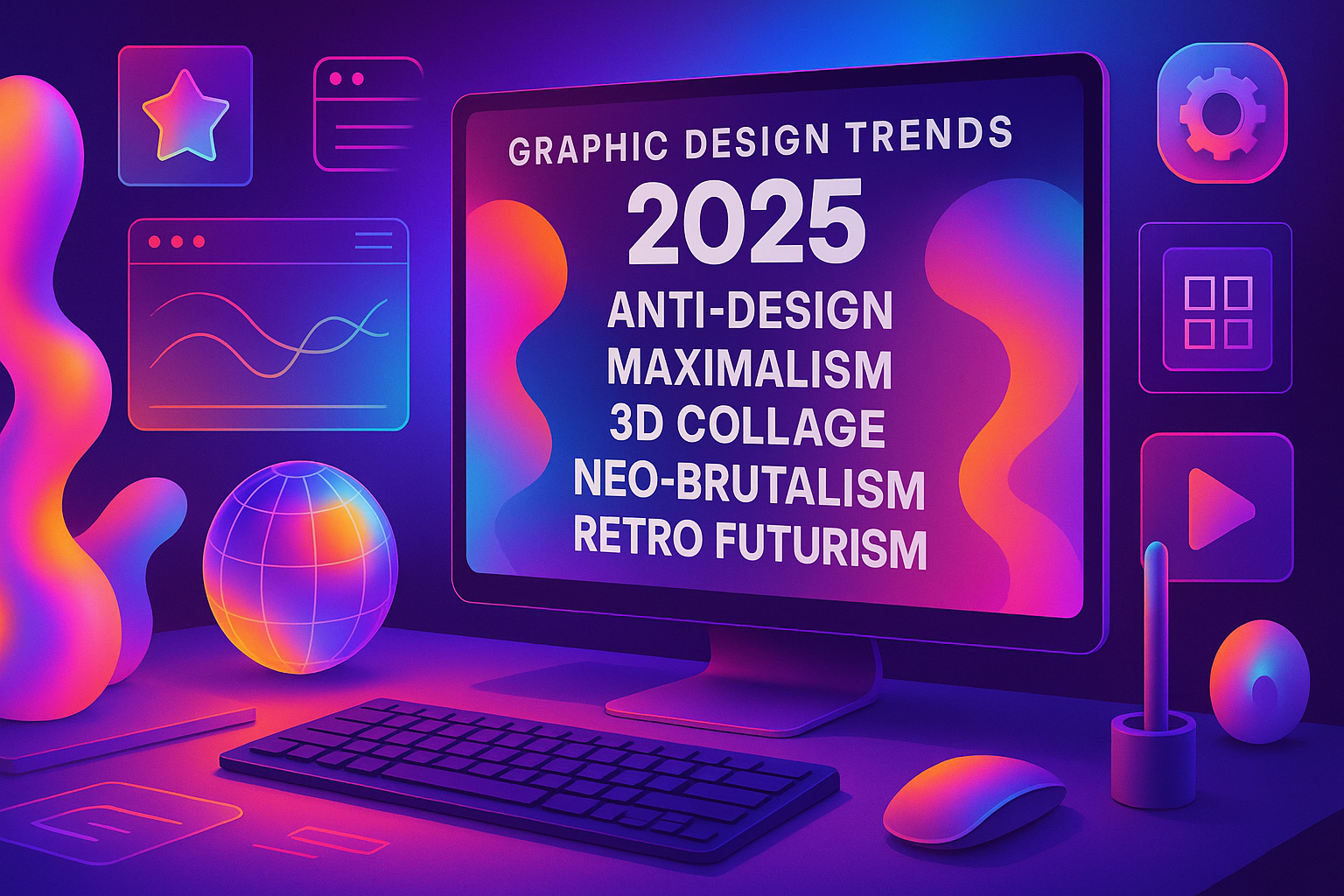
    As the digital world continues to evolve at lightning speed, graphic design trends 2025 are already shaping how brands communicate, connect, and captivate. Whether you’re a startup or a global business, staying on top of visual branding trends is no longer optional—it’s essential.

    In this blog, we break down the graphic design trends 2025 that will define the year’s visual branding language, offering design inspiration and insights into how to stay ahead of the curve.

    Neo-Minimalism: The New Visual Calm

    Minimalist design is getting a reboot in 2025. But instead of flat whites and empty spaces, graphic design trends 2025 lean toward neo-minimalism—a sleeker, more structured form that balances simplicity with intentional detail.

    Expect cleaner lines, sharp grids, and bold fonts that create clarity and emphasis. Brands embracing minimalist design are focusing on accessibility, emotional resonance, and timeless elegance.

    Visual branding in 2025 will not just be about looking modern; it will be about reducing friction and delivering the message without noise.

    Futuristic UI & 3D Motion Graphics

    One of the most exciting graphic design trends 2025 is the rise of futuristic UI elements combined with interactive 3D motion graphics. This trend is being driven by the immersive expectations of Gen Z and Gen Alpha.

    Interfaces now mimic AR/VR experiences, even on flat screens. Think: glowing UI, soft gradients, holographic animations, and microinteractions that bring static screens to life.

    For visual branding, this is a huge shift. Brands will need to rethink how they animate their identity—logos that morph, buttons that pulse, and typography that responds to gestures.

    Loud and Layered Typography

    If you thought typography would take a backseat in 2025, think again. One of the top typography trends this year includes oversized, layered, and distorted type. Words are no longer static—they’re expressive, kinetic, and experimental.

    In 2025, graphic design trends push brands to treat type as art. You’ll see text that overlaps imagery, bleeds off-screen, or dynamically adapts to device motion.

    To maintain clarity while innovating, many brands are combining bold serif fonts with elegant sans-serif counterparts for contrast—a perfect example of how typography trends can fuel powerful visual branding.

    Color Palette Trends: Mood-Driven Tones

    Color plays a psychological role in visual branding, and color palette trends in 2025 are reflecting deeper emotional intelligence. Brands are leaning into mood-driven palettes—shades that provoke calm, energy, nostalgia, or futuristic wonder.

    Expect earthy pastels, deep tech blues, radiant corals, and muted neons to dominate the design landscape. The keyword here is contrast: pairing soft with bold, dark with radiant.

    These color palette trends give brands a flexible visual toolkit to adjust their messaging tone while keeping brand identity consistent.

    Brand Maximalism: More Is More

    While minimalism dominates interfaces, creative branding ideas are going the opposite way when it comes to campaigns. Welcome to brand maximalism—where chaos is curated.

    Graphic design trends 2025 celebrate maximalism through collages, stickerbombing, retro glitch aesthetics, and playful randomness. This approach is especially popular with Gen Z-focused brands that want to break the algorithm with eye-popping, scroll-stopping visuals.

    When done right, this version of maximalism becomes an immersive brand story—a chaotic harmony that reflects the real-world complexity of today’s consumers.

    AI-Enhanced Design Inspiration

    AI is no longer just a tool; it’s a co-creator. In 2025, graphic design trends include AI-assisted design workflows that generate rapid design inspiration, style suggestions, and even real-time brand assets.

    AI doesn’t replace human creativity—it enhances it. For visual branding teams, this means faster prototyping, smarter personalization, and endless creative branding ideas that evolve with consumer behavior.

    digital strategies

    Inclusive Design & Ethical Visual Branding

    Ethical and inclusive design has shifted from trend to mandate. In 2025, brands must visually reflect their values. Inclusive representation, accessible fonts, diverse illustrations, and culturally sensitive color choices are now key parts of visual branding.

    This is not just good ethics; it’s smart business. Consumers are choosing brands that reflect their identity—and design is the first impression.

    Retro Futurism: Yesterday Meets Tomorrow

    A surprising favorite in graphic design trends 2025 is retro-futurism. It merges nostalgic 80s/90s elements—bold gradients, pixel art, VHS overlays—with futuristic shapes and layouts.

    This nostalgic twist gives design inspiration to both old and new audiences, combining familiarity with novelty. It also adds emotional depth to visual branding, allowing brands to honor their heritage while innovating forward.

    Grow Business

    How to Apply These Graphic Design Trends in 2025

    To integrate these graphic design trends 2025 into your visual branding:

    • Audit your current design assets. Are they flat, dated, or overly complex?
    • Incorporate at least one modern typography trend to refresh your content without overhauling everything.
    • Update your color palette to align with current mood-driven color palette trends.
    • Use AI tools for faster prototyping and design inspiration.
    • Balance minimalism and maximalism depending on the platform and audience.

    Final Thoughts

    In 2025, graphic design trends are all about balance—between the futuristic and the familiar, the minimalist and the maximalist, the technological and the human. If you’re building a brand that lasts, your visual branding must reflect these evolving design languages.

    So whether you’re creating social media campaigns, website designs, or full brand overhauls, let these graphic design trends 2025 guide you toward innovation, clarity, and impact.

    Need fresh design inspiration or a partner to bring these trends to life? Reach out—we’re obsessed with turning creative branding ideas into unforgettable visual stories.

  • If You’re Reading This, You Already Know You Need Better Design

    If You’re Reading This, You Already Know You Need Better Design

    Let’s skip the small talk.

    If you’ve landed here, something about your brand’s visual identity just isn’t working. Maybe your logo feels outdated. Maybe your website is clunky. Maybe your social media posts look like generic templates.

    Whatever the case, you already know it’s not doing justice to your brand.

    Therefore, it’s time for a shift. Not a surface-level tweak—but a complete system built on better design.

    The Hidden Costs of Bad Design

    You might assume your design is fine. However, bad design quietly chips away at your credibility—and your revenue.

    • High bounce rates despite steady traffic

    • Visitors leaving confused about what you actually do

    • Competitors with weaker offerings still getting more leads

    • Feeling awkward sharing your own website

    • Inconsistent visuals killing your brand trust

    In other words, poor design isn’t just unattractive—it’s expensive.

    Why Better Design = Better Results

    Let’s be honest—people judge instantly.
    You have less than 5 seconds to convince them to stick around.

    As a result, your brand visuals need to:

    • Grab attention

    • Build trust

    • Direct the next action

    That’s why you need better design—and a website design agency that understands both style and substance.

    Digital Marketing Services

    What “Creative Branding” Really Means

    When we say creative branding, we don’t mean just flashy graphics or trendy fonts.
    We mean visuals rooted in brand strategy.

    Here’s what that actually looks like:

    • A logo that reflects your story and values

    • A color palette and fonts that express your tone

    • Landing pages that prioritize clarity over clutter

    • Scroll-stopping graphics made for engagement

    • Ads and emails that are polished and consistent

    • A brand identity that’s unified across all platforms

    Ultimately, your brand needs to look as strong as it performs.

    Our Process: Built for Brands That Want to Win

    At Way2Connect, we don’t believe in templates or shortcuts.
    We’re a website design agency that combines business strategy with creative branding and strong execution.

    Here’s how we do it:

    1. Discover – We uncover your goals, audience, and competition
    2. Design – We build visual assets that resonate and stand out
    3. Develop – We create responsive, fast, and functional websites
    4. Deploy – We test and optimize across devices
    5. Drive – We support your campaigns with ongoing performance design

    In short, it’s not just design—it’s a brand system made to grow with you.

    Real Results, Real Fast

    Let’s talk proof.

    A SaaS startup approached us with a brilliant product, but a weak visual identity.
    We transformed their brand—logo, website, pitch deck, and digital assets.

    Within 90 days:

    • Website engagement rose by 245%

    • Email click-through rates tripled

    • Their redesigned pitch deck helped secure a $500K seed round

    Clearly, smart, better design pays off.

    Grow Business

    Still Wondering If It’s Worth It?

    Here’s the truth:

    You don’t need more ads.
    You don’t need another redesign next year.
    Instead, you need better design—one that aligns with your goals and delivers results.

    Otherwise, every weak visual and inconsistent message is costing you leads, conversions, and credibility.

    Make Your Brand Impossible to Ignore

    If you’re launching, rebranding, or just tired of looking like everyone else—it’s time to talk.

    At Hezemon, we specialize in creative branding that combines strategy, storytelling, and performance—one bold design at a time.

    So, let’s make your brand unforgettable.

    Because deep down, you already know—
    It’s time for better design.

  • AI Marketing in 2025: Beyond ChatGPT – What’s Next?

    AI Marketing in 2025: Beyond ChatGPT – What’s Next?

    As we move deeper into 2025, AI continues to redefine how brands connect with customers. While ChatGPT and similar tools revolutionized content creation and customer support over the past few years, the landscape of AI marketing has rapidly evolved beyond just chatbots and auto-generated responses. Today, we stand at the edge of a far more advanced era driven by personalization, real-time analytics, and autonomous marketing systems.

    In this blog, we explore the key shifts, tools, and opportunities shaping the AI marketing trends and examine what the future of AI in marketing truly looks like in the years ahead.

    The ChatGPT Era Was Just the Beginning

    ChatGPT ushered in a wave of conversational marketing tools, helping brands generate blog posts, emails, and chatbot scripts faster than ever. However, AI marketing in 2025 is about much more than speed or automation. It’s about intelligence—systems that not only respond but also anticipate user needs, adapt in real time, and operate autonomously across platforms.

    From content generation to customer segmentation, AI is now fully integrated into every stage of the marketing funnel. And the future of AI in marketing is heading toward even more immersive, predictive, and emotion-aware systems.

    Microsoft Office 365 Reseller

    Emerging Tools and Technologies in AI Marketing

    Several new platforms and technologies are extending the capabilities of AI beyond what ChatGPT offers. Generative models are now being trained specifically for branding, visual storytelling, and even sentiment-based content variations.

    Some emerging innovations include:

    • Emotion AI: Tools that analyze customer tone and mood to tailor messages in real time
    • AI-powered video generation: Platforms that automatically create product videos and explainers from text prompts
    • Synthetic personas: AI agents that simulate buyer behavior for testing campaigns before they go live
    • Autonomous agents: Bots that manage ad bids, optimize campaigns, and A/B test content automatically

    These developments signify a new chapter in AI marketing trends, one that’s less reactive and more intuitive.

    Predictive Meets Generative: A Perfect Marketing Duo

    The real power of AI marketing in 2025 lies in the synergy between predictive and generative AI. Predictive AI analyzes vast datasets to understand what will likely happen—such as which leads are most likely to convert or which content will perform best. Generative AI then takes that data to create highly customized campaigns tailored to those insights.

    For instance, an eCommerce platform can now predict which users will churn in the next 30 days—and launch dynamic, personalized email campaigns designed by generative models to re-engage them. This isn’t just automation; it’s hyper-intelligent orchestration.

    This powerful combination defines the next frontier in the future of AI in marketing and is changing how we define engagement, loyalty, and conversion.

    Grow Business

    AI Marketing Ethics and the Trust Factor

    As the capabilities of AI grow, so do concerns about authenticity, bias, and data privacy. Brands must now balance innovation with responsibility.

    AI-generated content must be clearly disclosed, and marketers must ensure algorithms are not reinforcing harmful stereotypes. Furthermore, the rise of emotion-based marketing tools raises ethical questions about how far personalization should go.

    For future-proof success in AI marketing trends, trust will be as important as technology. Customers want transparency and value human-centric AI that augments—not replaces—authentic brand interaction.

    The Road Ahead: Human-AI Collaboration

    So, what’s next in the future of AI in marketing?

    Expect to see marketing teams evolve into hybrid squads, where human strategists work alongside AI co-pilots. Creative directors will use AI for ideation, analysts will lean on machine learning for trendspotting, and copywriters will refine AI drafts with emotional nuance.

    The companies that win will be those that embrace AI not as a replacement—but as an intelligent partner.

    Final Thoughts: Staying Ahead in AI-Driven Marketing

    The age of AI marketing is here, and it’s not slowing down. From hyper-personalized campaigns to synthetic influencers and predictive lead scoring, the potential is limitless. But with that potential comes responsibility, creativity, and a need for agility.

    To thrive in this new age, marketers must continually explore the latest AI marketing trends while staying rooted in ethics, empathy, and brand authenticity. The future of AI in marketing is bright—but only for those bold enough to evolve with it.

  • Top Website Development Frameworks to Watch in 2025

    Top Website Development Frameworks to Watch in 2025

    In the ever-evolving digital landscape, choosing the right website development framework can make or break your project. As businesses aim for faster performance, seamless user experience, and scalable architecture, developers must stay ahead of the curve.

    2025 is bringing innovation, speed, and smarter development workflows — all thanks to modern frameworks reshaping how websites and web apps are built.

    Let’s explore the top website development frameworks to keep your eye on in 2025 — and why they’re gaining traction in the latest web development trends.

    Microsoft Office 365 Reseller

    1. Next.js – For SEO-Optimized, Lightning-Fast Apps

    Next.js, built on top of React, continues to dominate the development world. With server-side rendering (SSR), static site generation (SSG), and image optimization built-in, it’s the go-to framework for SEO-focused and high-performance websites.

    Why it stands out in 2025:

    • Native support for React Server Components
    • Improved routing and layout management
    • Excellent for Jamstack architecture and headless CMS integration

    If you’re building enterprise-grade platforms or content-rich websites, Next.js should top your list.

    1. Remix – The Framework That Thinks About UX

    Remix is rising fast thanks to its focus on user experience and performance. Unlike traditional frameworks, Remix emphasizes data fetching and loading states to deliver smoother interactions.

    2025 features to note:

    • Better handling of async data
    • Reduced client-side JavaScript dependency
    • Excellent routing system with nested layouts

    As users expect faster, more intuitive websites, Remix positions itself as a strong competitor to traditional React-based tools.

    Grow Business

    1. SvelteKit – Minimal JavaScript, Maximum Speed

    SvelteKit, built on the Svelte compiler, compiles code to vanilla JS at build time. This reduces runtime overhead, making it one of the most efficient website development frameworks.

    Why it’s trending:

    • Minimal bundle sizes
    • Truly reactive architecture
    • Server-first rendering model

    In 2025, as performance becomes non-negotiable for UX and Core Web Vitals, SvelteKit is becoming the secret weapon for developers focused on speed.

    1. Nuxt 3 – Vue Developers’ Favorite

    Nuxt is to Vue what Next is to React — a powerful meta-framework with SSR, SSG, and API capabilities. With Nuxt 3 now fully stable, Vue developers are rapidly adopting it for projects that require flexibility and performance.

    Digital Marketing Services

    What’s new in Nuxt 3:

    • Based on Vue 3 and Vite
    • Enhanced module ecosystem
    • Improved DX (developer experience) with built-in composables

    For developers committed to Vue.js, Nuxt 3 represents the future of seamless, full-stack web apps.

    1. Django + HTMX – The Backend Renaissance

    While JavaScript frameworks dominate the front-end scene, Django is undergoing a revival — especially when paired with tools like HTMX. This combo brings interactivity to Django apps without full JavaScript frameworks.

    Why this stack matters in 2025:

    • Simpler architecture with fewer dependencies
    • Great for rapid prototyping
    • Cleaner integration of backend + frontend logic

    It’s gaining favor among devs tired of overcomplicated stacks and looking for productivity with Python.

    1. Astro – The Future of Static Site Generation

    Astro brings a new concept to the table: island architecture, where only interactive parts load JavaScript. This results in ultra-fast websites with zero JS bloat.

    Why developers love it:

    • Lets you write components in React, Vue, Svelte, etc.
    • Ships zero JS by default
    • Built-in image and markdown optimizations

    Astro fits perfectly into the current web development trends focusing on speed, minimalism, and DX.

    1. Blazor – Microsoft’s Bold Move in WebAssembly

    Blazor is Microsoft’s bet on .NET-powered websites using WebAssembly. It lets you write front-end logic in C#, eliminating the need for JavaScript in some scenarios.

    2025 improvements include:

    • Better performance via AOT (ahead-of-time) compilation
    • Smaller WASM footprints
    • Cross-platform web and desktop code sharing

    Blazor is ideal for enterprise apps where teams already use C# and want to unify their stack.

    What’s Driving These Web Development Trends in 2025?

    Several factors are shaping the choice of frameworks:

    • Speed & Core Web Vitals: Performance impacts search rankings and user retention.
    • Developer Experience (DX): Tools that are fun and fast to use gain quick adoption.
    • SEO & Accessibility: SSR and clean markup are key for ranking and inclusivity.
    • Security & Maintainability: Frameworks offering better structure and defaults reduce risk.

    Choosing the right framework is now less about hype — and more about long-term value, speed, and seamless scaling.

    Final Thoughts

    Whether you’re building a marketing site, SaaS platform, or internal dashboard, the right website development framework makes all the difference. In 2025, it’s not just about building fast — it’s about building smart.

    From the reactive power of SvelteKit to the hybrid flexibility of Next.js and Nuxt, each framework brings its own strengths to the table. The key is aligning your tech stack with your team’s strengths, project goals, and future scalability.

    Stay sharp, test often, and keep building — the web is only getting smarter.

  • How AI is changing digital marketing for the better?

    How AI is changing digital marketing for the better?

    AI in digital marketing has totally changed how businesses talk to customers, get more done, and get a better return on their investment (ROI). AI-driven technologies will likely have an effect on more than 30% of marketing strategies around the world by 2025. These technologies will offer hyper-personalized predictive analytics and automation that boosts efficiency and customer experiences.

    Grow Business

     Making content and automating tasks

     AI has changed content marketing by letting it make targeted and interesting content on its own. Tools like Persado and IBM Watson use natural language processing (NLP) to make marketing content, blog posts, and social media updates that are more relevant to the audience. To give you an example, BuzzFeed’s use of AI to drive content has increased fan engagement by 35%. In the same way, Netflix’s AI-powered suggestion engine shapes 80% of material consumption by studying how people watch.

     AI makes visual marketing better in ways that go beyond words. Artificial intelligence helps platforms like Bannerflow make dynamic ad creatives, which cuts production time by 60% while keeping brand consistency. The travel company Priceline uses AI to personalize its email marketing, which raises the number of opens by 40% and the number of sales by 25%.

     Customization and Analytics for the Future

     With predictive analytics, businesses can see what customers want before they even know they want it. Amazon’s 35% of its total income comes from its AI-powered recommendation engine, which looks at how people browse and buy things. Since AI and VR were added to Sephora’s Virtual Artist app, 20% more items were bought online.

     AI-driven crowd segmentation is another way that marketing methods are getting better. Salesforce Einstein sorts customers into groups based on their past actions, which helps businesses make their products more relevant to each customer. Click-through rates have gone up by 50% on Unilever’s social media ads that use AI to change how they bid in real time.


     AI-Driven Client Engagement

     Chatbots that are run by AI are changing customer service because they can help in real time, seven days a week. The Facebook Messenger chatbot for Sephora gives beauty tips and product ideas, which improves the rate of conversion by 30%. In the same way, Netflix’s AI changes pictures based on each person’s tastes, which increases click-through rates by 25%.

    Azure Business Continuity with Site Recovery
    Hezemon | Azure Business Continuity with Site Recovery
     Problems with ethics in AI marketing

     Marketing that is driven by AI has a lot of benefits, but there are some social problems that need to be fixed. Companies need to use ethical AI methods for reasons like data privacy, transparency, and computer bias. Laws like GDPR and CCPA require companies to have strict data security policies. These policies force companies to make sure their AI models are not biased and show how they make decisions automatically.

     In the End..

     AI is changing digital marketing by making it easier to make content, make it more personal, and get people involved. But companies need to find a balance between new ideas and social duty if they want to keep customers for a long time. Using AI strategically can help businesses get more people involved, make marketing efforts more efficient, and experience sustainable growth in the digital age.

  • The Digital Marketing Stack for 2025: Tools, Trends & Tech

    The Digital Marketing Stack for 2025: Tools, Trends & Tech

    As digital ecosystems evolve at warp speed, marketing leaders must assemble a hyperpowered toolkit—one that not only addresses today’s challenges but also anticipates tomorrow’s opportunities. In this blog, we unpack the “Digital Marketing Stack for 2025,” exploring the bleeding-edge tools, emergent trends, and next-generation technologies that will shape marketing strategies over the next year and beyond. Along the way, we introduce Hezemon as your future-ready partner, guiding you through the HyperFusion of data, creativity, and automation to deliver unparalleled ROI and brand resonance.


    1. Introduction: Why 2025 Demands a New Stack

    By 2025, consumer expectations, regulatory landscapes, and platform dynamics will have shifted dramatically. From AI-driven personalization to privacy-first targeting, marketers must adopt an Adaptive Intelligence Framework—one that marries predictive analytics with human-centric creativity. The “stack” of 2025 isn’t a static list of apps; it’s a fluid constellation of interoperable modules powered by data sovereignty, edge computing, and neuroscientific insights. In short, it’s time to decode the Digital Marketing Genome.

    Hezemon’s HyperFusion ethos embodies this shift: we don’t just plug in tools—we architect a living ecosystem where every piece of technology communicates, learns, and evolves with your brand.


    2. Core Pillar: Data & Analytics 3.0

    2.1 Quantum-Ready Analytics Engines

    Gone are the days of siloed dashboards. By 2025, marketers will leverage Quantum-Ready Analytics Engines—platforms capable of ingesting petabytes of first-party data, processing it through quantum-inspired algorithms, and outputting hyper-precise predictions. These engines democratize “big AI” across mid-market companies, enabling predictive churn modeling, dynamic pricing simulations, and hyperlocal sentiment analysis in near real-time.

    • Hezemon InsightSphere: Our proprietary predictive engine combines federated learning with on-device inference, ensuring data privacy without sacrificing lucidity.

    2.2 Ethereal Data Fabric & Privacy-Centric ID Graphs

    Consumer trust hinges on transparency. The 2025 stack integrates Ethereal Data Fabrics—cross-cloud architectures that anonymize and layer data to comply with global privacy mandates (GDPR 3.0, CCPA+, etc.). Coupled with Privacy-Centric ID Graphs, brands can orchestrate authenticated customer journeys without third-party cookies, using hashed identity tokens to personalize messaging across channels.

    • Hezemon TrustMesh: We build identity graphs that respect user consent while delivering seamless ad attribution and journey analytics.


    3. AI-Powered Creative & Content Generation

    3.1 Neuro-Engagement Copy Labs

    Traditional copywriting tools will be eclipsed by Neuro-Engagement Copy Labs, AI-driven studios that analyze neurocognitive signals, such as eye-tracking data and emotional resonance scores, to optimize headlines, CTAs, and long-form content. These labs generate copy variants in milliseconds, A/B test them seamlessly, and refine tone-of-voice according to brand archetypes (Hero, Sage, Explorer).

    • Hezemon NeuroQuill: Our in-house AI atelier maps brainwave-inspired inputs to micro-copy, ensuring each message elicits maximum engagement while staying on-brand.

    3.2 Generative Visual AI: Beyond Stock Imagery

    Visual storytelling in 2025 harnesses Generative Visual AI to produce bespoke assets—3D product mockups, interactive infographics, and immersive AR filters—on demand. By tapping into style-transfer networks and vector-based generative adversarial nets (GANs), brands can choreograph an omnichannel visual narrative that adapts to each platform’s unique dimensions and user behaviors.

    • Hezemon VisionForge: We craft generative templates that auto-scale across screens—from smart glasses to foldable devices—ensuring pixel-perfect experiences without exploding budgets.


    4. Personalization & Customer Experience

    4.1 HyperTargeted Automations & Behavioral Triggers

    The 2025 stack orchestrates HyperTargeted Automations: event-triggered workflows that react to micro-moments—think cart abandonment signals enriched by real-time weather data, or loyalty enhancements activated when a subscriber hits a milestone. These automations use dynamic segmentation, adjusting offers based on individual lifetime value (iLTV) predictions and sentiment trajectories.

    • Hezemon AutoPulse: Our orchestration layer integrates with major CRMs, CDPs, and IoT sensors, delivering drip campaigns, in-app nudges, and smart push notifications at the exact moment of intent.

    4.2 Omnichannel Conversational AI

    By 2025, conversational AI will transcend chatbots. Omnichannel Conversational AI platforms will unify voice-activated assistants, messaging apps, and on-site chat under a singular neural dialog engine. This engine interprets context, sentiment, and customer history to resolve queries proactively, upsell complementary products, and even facilitate seamless transactions via voice commerce.

    • Hezemon ChatContinuum: Our natural language orchestration integrates with VCAs (Voice Commerce Assistants) across smart speakers, in-car infotainment systems, and wearable devices, ensuring your brand answers, educates, and sells where customers already are.


    5. Martech Integration & Workflow Orchestration

    5.1 API-First Microservices Architecture

    In 2025, monolithic martech stacks give way to API-First Microservices Architectures. Each module—analytics, CRM, email, ad buying, content management—exposes granular APIs that developers can assemble into custom workflows. This modularity accelerates time-to-market, reduces vendor lock-in, and supports continuous innovation.

    • Hezemon PolyBridge: Our integration fabric unifies over 200 native APIs, offering prebuilt connectors to leading platforms (e.g., Salesforce QuantumCRM, Adobe Experience LivingDB) and ensuring data sync across clouds.

    5.2 Low-Code/No-Code Growth Portals

    Citizen developers and marketers will rely on Low-Code/No-Code Growth Portals to spin up experiments, landing pages, and micro-sites in a matter of hours. These portals come with built-in A/B engines, real-time analytics overlays, and GDPR-compliant consent banners—all without a single line of code.

    • Hezemon FlowCraft: A drag-and-drop growth portal that encapsulates best practices for SEO, accessibility (WCAG 3.0), and Core Web Vitals optimization, empowering marketing teams to own every step of the funnel.


    6. Paid Media & Programmatic Evolution

    6.1 AI-Optimized Programmatic Ecosystems

    The programmatic realm will mature into AI-Optimized Programmatic Ecosystems, where real-time bidding (RTB) is guided by reinforcement learning agents. These agents optimize bids and placements across display, video, audio, and CTV (Connected TV) in milliseconds, balancing CPM targets, viewability metrics, and brand safety constraints.

    • Hezemon BidNexus: Our RL-driven bidding engine ingests first-party intent signals and adjusts in-flight budgets based on live KPIs—maximizing cross-channel attribution and minimizing wasted spend.

    6.2 Blockchain-Enabled Transparency & Fraud Mitigation

    Ad fraud remains a menace. By 2025, Blockchain-Enabled Transparency solutions will provide an immutable ledger for each impression and click, allowing stakeholders to trace the complete supply chain of an ad impression. Smart contracts will automatically reconcile payments once engagement thresholds are verified, eliminating middlemen and billing discrepancies.

    • Hezemon BlockAdGuard: Our integration with Ethereum-based ad ledgers ensures that every dollar spent returns a verifiable engagement, eliminating invalid traffic (IVT) and bolstering brand trust.


    7. Emerging Trends to Watch

    7.1 Neuromarketing & Emotion AI

    Emotional resonance is no longer an art—it’s a science. Emotion AI tools will parse micro-expressions through webcams (with explicit consent) and XAI (Explainable AI) modules to adapt messaging in real-time. Neuromarketing insights—derived from facial analysis and galvanic skin response—help brands craft campaigns that truly connect at the limbic level.

    • Hezemon SynapseSense: We integrate emotion-tracking SDKs into your content platforms, calibrating headlines, color palettes, and audio frequencies to optimize for positive arousal and memorability.

    7.2 Voice & Hyperlocal Search Optimization

    As voice assistants proliferate and smart city infrastructure emerges, Hyperlocal Search Optimization becomes critical. Brands must optimize for “proximity intent”—e.g., “nearest vegan café open now”—includ­ing 3D indoor mapping metadata and dynamic inventory feeds. By 2025, voice queries will account for over 40% of all search interactions, necessitating schema markups that cater to spoken language patterns.

    • Hezemon EchoMap: Our voice-SEO framework updates your knowledge graph in real-time, ensuring your local storefronts, promotions, and availability data are seamlessly discoverable through Siri, Alexa, and Bixby.


    8. Hezemon: Your Future-Ready Partner

    At Hezemon, we don’t just recommend tools—we architect a HyperFusionStack customized to your brand’s DNA. Our consultative approach encompasses:

    1. Strategic Diagnostics: We conduct a “Digital Genome Audit,” evaluating your current martech footprint, data readiness, and creative velocity.

    2. Blueprint Creation: We design a Modular Tech Blueprint that aligns with your KPIs—whether it’s revenue acceleration, brand awareness, or loyalty uplift.

    3. Implementation & Orchestration: Leveraging our Hezemon PolyBridge integration fabric, we seamlessly connect your chosen modules, ensuring data flows securely and insights are actionable.

    4. Continuous Innovation: Our PulseLab program monitors emerging tools, trends, and regulatory shifts—updating your stack quarterly so you remain at the bleeding edge.

    With Hezemon at your side, you don’t merely survive the digital transformation—you thrive within it.


    9. Building Your 2025 Stack: Step-by-Step

    1. Assess Your Data Foundation

      • Deploy Ethereal Data Fabric and TrustMesh to unify customer data and ensure privacy compliance.

      • Score: 9/10 data readiness.

    2. Select Your AI-Driven Engines

      • Choose a Quantum-Ready Analytics Engine (e.g., Hezemon InsightSphere, Google Quantum AI).

      • Integrate Neuro-Engagement Copy Labs for content generation.

    3. Orchestrate Personalization & Automation

      • Activate HyperTargeted Automations (Abandonment, Win-Back, VIP triggers).

      • Deploy Omnichannel Conversational AI (Hezemon ChatContinuum, Drift, Intercom).

    4. Optimize Paid Media & Ad Tech

      • Integrate an AI-Optimized Programmatic Ecosystem (Hezemon BidNexus, The Trade Desk).

      • Layer in Blockchain-Enabled Transparency for fraud mitigation (Hezemon BlockAdGuard, ads.txt 3.0).

    5. Design for Emerging Touchpoints

      • Implement Emotion AI and Neuromarketing tools (Hezemon SynapseSense, Affectiva).

      • Optimize for Voice & Hyperlocal Search (EchoMap, Google My Business with voice schema).

    6. Continuous Learning & Iteration

      • Engage in Hezemon’s PulseLab for quarterly stack reviews.

      • Iterate on your HyperFusionStack to leverage new AI models, privacy protocols, and creative engines.


    10. Conclusion: Embrace the HyperFusion Era

    The marketing landscape of 2025 is defined by integration, intelligence, and intimacy. It’s no longer enough to pick tools off a shelf; you must weave them into an ecosystem that learns, adapts, and evolves with your audience’s shifting desires. With Hezemon’s HyperFusion approach—anchored by Adaptive Intelligence, Ethical Data Fabrics, and Emotion AI—your brand won’t just keep pace; it will set the pace.

    Ready to elevate your marketing stack and outpace the competition? Partner with Hezemon today, and let’s co-create the future of digital engagement.


    About Hezemon

    Hezemon is a full-spectrum digital marketing consultancy specializing in AI-driven martech integration, neuroscience-based creative, and privacy-first data orchestration. Our team of strategists, data scientists, and creative alchemists partners with ambitious brands to build HyperFusionStacks that drive scalable growth and lasting brand loyalty.

  • Agentic AI: The Secret Weapon Turning Digital Marketing into a Viral Frenzy!

    Agentic AI: The Secret Weapon Turning Digital Marketing into a Viral Frenzy!

    Digital marketing is evolving at warp speed, and in the center of this whirlwind is a game-changing force—Agentic AI. Forget passive, reactive AI systems. This is active, self-directed intelligence, a marketer’s dream come true. Agentic AI doesn’t just follow instructions—it takes charge, learns, adapts, and delivers.
    Let’s dive into how this next-gen technology is reshaping the digital marketing landscape.
    • From Followers to Leaders: The Rise of Agentic AI
    Traditional AI waits for instructions. Agentic AI doesn’t. It’s an independent decision-maker, proactively analyzing data, predicting trends, and designing strategies.
    Imagine launching a campaign and having the AI instantly identify untapped markets or micro-segments, like “urban millennials looking for eco-friendly skincare.” With Agentic AI, these insights aren’t tasks—it’s just another day at the office.
    Grow Business
    • Hyper-Personalization Like Never Before
    Modern consumers demand content tailored specifically to them. Agentic AI delivers on this demand by creating hyper-targeted, dynamic campaigns in real time.
    1. It doesn’t just know your audience—it reads them like a book.
    2. It crafts personalized emails, ads, and messages that resonate deeply with every individual in your audience.
    Take a scenario where a customer is scrolling through your website. Based on their past behavior, Agentic AI predicts their next move, tailoring recommendations to make conversion almost inevitable.
    • Creativity at Light Speed
    Agentic AI doesn’t stop at insights—it also creates. Need 100 unique ad copy variations tested across five platforms? Consider it done.
    Imagine this:
    1. By 10 AM, your campaign’s underperforming.
    2. By noon, the AI has already generated new creatives, A/B tested them, and optimized ad placements.
    3. By 3 PM, your ROI has skyrocketed.
    It’s marketing agility like you’ve never seen before.
    • Real-Time Optimization
    Agentic AI works faster than the speed of marketing itself. It adjusts campaigns on the fly, reallocating budgets, tweaking messaging, and optimizing targeting—all without needing human intervention.
    Microsoft Office 365 Reseller
    Case in point: If a specific audience isn’t engaging with your campaign on Instagram, Agentic AI will immediately shift focus to LinkedIn, YouTube, or wherever your target market thrives.
    • Emotional Marketing Mastery
    Agentic Artificial Intelligence isn’t just logical—it’s emotionally intelligent. It analyzes tone, sentiment, and intent to create content that connects with human emotions.
    •From empathetic customer service messages to storytelling ads that pull at heartstrings, this AI knows how to make people feel understood and valued.
    • Predicting the Future of Trends
    Agentic Artificial Intelligence thrives on prediction and foresight. It identifies emerging trends before they’re even visible on the horizon and prepares your brand to capitalize on them.
    For example, while the market is still buzzing about influencer marketing, Agentic Artificial Intelligence might already be crafting your strategy for the next big thing—whether that’s virtual reality experiences or the metaverse.
    Why Agentic AI is a Marketer’s Superpower
    1. Speed: It works faster than a human team could ever dream of.
    2. Precision: It targets with laser accuracy, ensuring every dollar spent delivers maximum ROI.
    3. Scalability: It handles hundreds of campaigns simultaneously, fine-tuning each one for success.
    The Future Belongs to Agentic Artificial Intelligence
    Agentic Artificial Intelligence is not just a tool; it’s a partner, strategist, and creative powerhouse. It eliminates the guesswork and grunt work, letting marketers focus on what truly matters—building impactful brands and creating unforgettable experiences.
    Are you ready to let Agentic AI lead your digital marketing efforts? Because the future isn’t waiting, and neither should you.
  • Great on Paper, Doomed in Reality: The Strategy Paradox!

    Great on Paper, Doomed in Reality: The Strategy Paradox!

    In the world of business, crafting a strategy is often considered the cornerstone of success. Companies invest significant time, resources, and talent into developing strategies that promise to transform their operations, seize market opportunities, or outpace competitors. Yet, even the most meticulously designed strategies sometimes fail to take hold. Why does this happen?

    Understanding the gap between strategy formulation and execution is critical. Below, we explore some key reasons why great strategies falter and what organizations can do to bridge the gap.

    1. Lack of Clear Communication

    A strategy, no matter how brilliant, is only as good as the people executing it. When leaders fail to communicate the strategy effectively, employees are left confused about its purpose and their roles in it. Complex jargon, ambiguous goals, or inconsistent messaging can dilute the strategy’s intent.

    Solution:
    Invest in a robust communication plan. Use simple, clear language and tailor messages to different audiences. Ensure everyone understands the strategy’s “why,” “what,” and “how.”

    2. Cultural Resistance

    Organizational culture can either be a strategy’s greatest ally or its biggest obstacle. A strategy that requires employees to shift behaviors, adopt new processes, or abandon long-standing practices can meet resistance if the culture isn’t aligned.

    Solution:
    Align the strategy with the organization’s culture or proactively shape the culture to support the strategy. Engage employees early, listen to their concerns, and address fears of change.

    Microsoft Office 365 Reseller

    3. Failure to Address Execution Challenges

    Many strategies look perfect on paper but falter in execution. Unrealistic timelines, inadequate resources, or lack of accountability can derail even the most promising plans.

    Solution:
    Break the strategy into actionable steps with clear milestones. Allocate resources, define roles, and create accountability structures to ensure progress.

    4. Overlooking Stakeholder Buy-In

    Strategies often fail when key stakeholders—whether employees, customers, or partners—are not fully on board. Without their buy-in, enthusiasm and support for the strategy will wane.

    Solution:
    Involve stakeholders in the strategy-development process. Demonstrate how the strategy benefits them and align their goals with the strategic objectives.

    Grow Business

    5. Rigid Mindset and Inflexibility

    In a rapidly changing world, even the best strategies may need adjustments. A rigid approach to execution can render a strategy obsolete before it gains traction.

    Solution:
    Adopt an agile mindset. Regularly review the strategy’s progress and make data-driven adjustments to respond to new opportunities or challenges.

    6. Lack of Leadership Commitment

    When leaders do not actively champion a strategy, it sends a message that it isn’t a priority. Employees may see the strategy as just another fleeting initiative rather than a transformative vision.

    Solution:
    Leaders must model the behavior they expect from their teams. They should communicate the strategy’s importance, track progress, and celebrate wins along the way.

    Digital Marketing Services

    7. Misalignment with Market Realities

    Sometimes, a strategy fails because it doesn’t address the realities of the market. Overestimating demand, ignoring competitors, or misreading customer needs can render a strategy ineffective.

    Solution:
    Base your strategy on thorough market research and continuously monitor external factors. Stay attuned to industry trends, customer feedback, and competitive dynamics.

    Conclusion: Bridging the Gap Between Vision and Action

    Building strategies is more than a plan—it’s a commitment to a shared vision. For it to succeed, organizations must address cultural, operational, and leadership challenges. The secret lies in creating a seamless connection between strategic vision and ground-level execution. With clear communication, stakeholder involvement, and adaptability, even the most ambitious strategies can take hold and drive lasting success.

    What’s your organization’s biggest hurdle in implementing strategies? Share your thoughts in the comments below!