Author: hezemon_admin

  • Your Goals, Our Strategy: Building a Digital Roadmap for Growth

    Your Goals, Our Strategy: Building a Digital Roadmap for Growth

    In today’s competitive digital world, every business has ambitions. Some want to capture more leads, others want to expand brand awareness, and many want to improve conversions. But here’s the challenge: goals without a clear plan are just wishes. That’s why you need a digital marketing roadmap for business growth — a step-by-step strategy that connects your business objectives with the right online tactics.

    At Hezemon, we believe in a simple truth: You’ve got goals. We’ve got the roadmap. And that roadmap is built by aligning your marketing efforts with your long-term vision.

    Grow Business

    Why a Digital Marketing Roadmap is Essential

    Many businesses jump straight into ads, social media, or SEO without a defined path. But just like building a house, you need a blueprint before you start laying bricks. A digital marketing roadmap for business growth ensures every effort, every campaign, and every investment contributes directly to your objectives.

    Without it, marketing activities often end up scattered, with little connection to actual results. With it, your marketing becomes intentional, measurable, and scalable.

    Step 1: Align Marketing with Business Goals

    The first step in creating a roadmap is understanding how to align marketing strategy with business goals. If your goal is to increase revenue by 20% this year, your marketing shouldn’t just focus on vanity metrics like clicks or impressions. Instead, your campaigns should drive qualified leads that convert into sales.

    For example:

    • A SaaS company aiming for higher retention should design email campaigns around product onboarding and customer education.
    • A retail brand with aggressive growth targets should focus on performance marketing tied to customer acquisition costs.

    When you clearly know how to align marketing strategy with business goals, you stop chasing random opportunities and start focusing only on tactics that drive measurable outcomes.

    Step 2: Goal-Based Branding & Website Development

    Your website isn’t just an online brochure — it’s your most powerful sales tool. But is it aligned with your business goals? That’s where goal-based branding and website development strategies come in.

    • If your goal is lead generation, your website needs clear CTAs, landing pages, and conversion-focused design.
    • If your goal is brand awareness, your website should highlight storytelling, values, and thought leadership content.
    • If your goal is customer trust, your website must showcase testimonials, case studies, and social proof.

    Too often, businesses build websites that “look nice” but don’t serve their growth goals. By implementing goal-based branding and website development strategies, you transform your site into a roadmap checkpoint — guiding every visitor closer to your objectives.

    Step 3: Create Campaigns that Serve the Roadmap

    Once your goals and foundation are set, your campaigns should directly tie back to them. Here’s how a digital marketing roadmap for business growth connects channels:

    • SEO & Content Marketing → Builds authority, captures organic leads, and supports long-term brand equity.
    • Paid Ads (Google/LinkedIn/Facebook) → Drives fast, scalable traffic aligned with specific conversion goals.
    • Email & Automation → Nurtures leads and improves customer lifetime value.
    • Social Media Marketing → Increases visibility, strengthens community, and amplifies brand storytelling.

    Every campaign is not just “marketing.” It becomes a tactical step in the roadmap — each one aligned to measurable KPIs.

    Step 4: Measure, Optimize, Scale

    The beauty of a digital marketing roadmap for business growth is that it isn’t static. Markets evolve, buyer behavior shifts, and platforms change. That’s why measurement and optimization are built into the roadmap.

    By reviewing KPIs regularly, you can answer key questions:

    • Are our marketing activities driving real business growth?
    • Do we need to reallocate budgets to align better with goals?
    • Which campaigns support revenue, retention, or branding most effectively?

    This ongoing refinement keeps your roadmap relevant, ensuring your goal-based branding and website development strategies and campaigns keep delivering ROI.

    Real-World Example: A Roadmap in Action

    A mid-sized IT services firm came to us struggling with low-quality leads. Their marketing was active — ads, SEO, and social media — but none of it tied back to business growth.

    We redesigned their roadmap around three goals:

    1. Improve website conversion rate.
    2. Generate qualified B2B leads.
    3. Build trust with enterprise clients.

    Here’s what changed:

    • Their website was rebuilt using goal-based branding and website development strategies, featuring case studies and a streamlined funnel.
    • Campaigns were redesigned to demonstrate how to align marketing strategy with business goals — focusing on lead nurturing, not just clicks.
    • We executed an integrated digital marketing roadmap for business growth that connected paid campaigns with content and email automation.

    Within six months, their qualified leads doubled, and revenue grew by 28%.

    Final Thoughts

    Your goals deserve more than random marketing activities. They deserve a clear, strategic roadmap. By aligning every campaign with your business objectives, designing websites that serve outcomes, and building consistent branding, you create a digital marketing roadmap for business growth that’s actionable and measurable.

    Remember: marketing success doesn’t come from doing everything. It comes from doing the right things in the right order — always guided by your goals.

    At Hezemon, we don’t just run campaigns; we build goal-based branding and website development strategies that align with your vision. Because your growth story deserves more than chance — it deserves a roadmap.


  • Pocket Presence: How to Make Your Brand Mobile-First and Memorable

    Pocket Presence: How to Make Your Brand Mobile-First and Memorable

    In today’s fast-paced digital world, your brand’s mobile presence  isn’t a “nice to have” — it’s a must-have. With over 60% of all online traffic coming from smartphones and tablets, small businesses that fail to invest in mobile-friendly website development risk losing potential customers before they even engage. Whether you’re a boutique retailer, a local restaurant, or a service provider, adopting a mobile-first website approach ensures your brand stays relevant, accessible, and memorable.

    Why Mobile-Friendly Website Development is Crucial for Small Businesses

    For small businesses, every customer interaction counts. A slow, unresponsive, or poorly optimized website can instantly drive visitors away. Mobile-friendly website development for small businesses is about more than just shrinking a desktop site to fit a phone screen. It’s about designing with mobile users in mind from the very beginning — ensuring fast loading times, clear navigation, and a user experience tailored for small screens.

    Grow Business

    A mobile-first website ensures:

    • Improved user experience (UX): Visitors can find what they need quickly without pinching, zooming, or scrolling excessively.
    • Higher search engine rankings: Google prioritizes mobile-friendly websites in its rankings.
    • Better conversion rates: A seamless mobile experience encourages visitors to take action — whether that’s buying, booking, or contacting you.

    Best Practices for Creating Mobile-First Websites

    Creating a mobile-first design means planning for the smallest screen first and then scaling up for larger devices. Here are some best practices for creating mobile-first websites that can help small businesses stand out:

    1. Start with Mobile-First Design Principles

    Instead of designing a full desktop site and then adapting it for mobile, begin with a mobile layout. Focus on:

    • Simple, clean designs
    • Prioritized content
    • Large, tap-friendly buttons
    • Minimal text entry
    1. Optimize for Speed

    Mobile users are often on slower connections. Optimize images, use lightweight code, and enable caching to improve load times. In mobile-friendly website development, speed is a direct driver of user satisfaction and conversions.

    1. Responsive Web Design

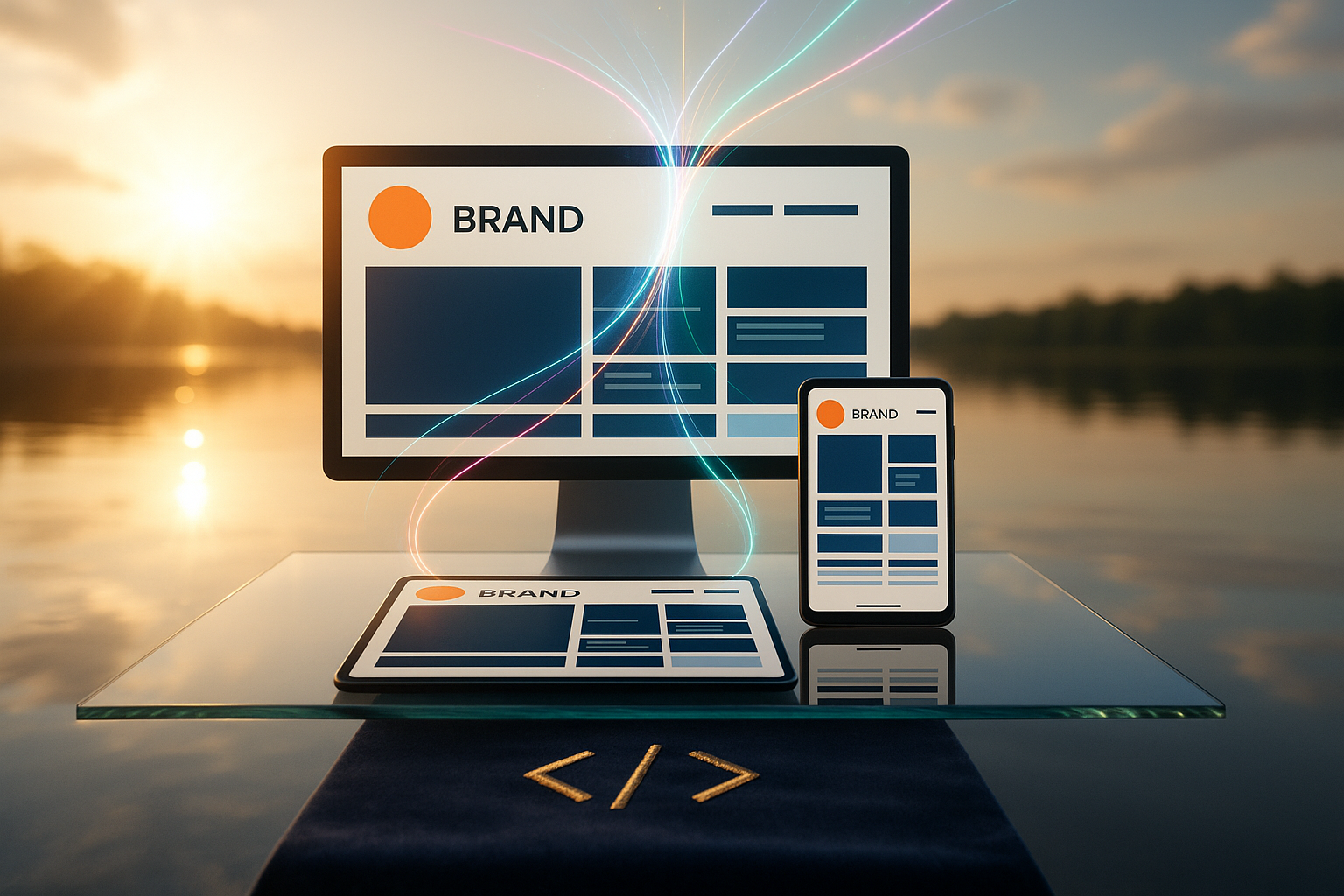
    Implement responsive web design techniques so your website automatically adjusts to any screen size — from small smartphones to large desktop monitors. This approach ensures consistent branding and usability across devices.

    4. Clear Navigation

    Menus should be easy to use on small screens. Consider using hamburger menus, sticky navigation bars, or collapsible sections to save space without sacrificing accessibility.

    1. Touch-Friendly Elements

    All clickable elements should be big enough to tap easily without accidentally hitting something else. This is a cornerstone of best practices for creating mobile-first websites.

    Improving User Experience with Responsive Web Design

    User experience (UX) is at the heart of successful mobile-friendly website development for small businesses. A responsive web design ensures that no matter what device your visitors use, they have an equally smooth experience.

    Consistent Branding Across Devices

    Responsive web design keeps your brand’s look and feel consistent across smartphones, tablets, and desktops. Customers recognize your brand instantly, regardless of how they access your site.

    Easy Content Consumption

    Mobile users often scan rather than read. Use short paragraphs, bullet points, and high-quality visuals to make your content more digestible.

    Faster Engagement

    With a mobile-first approach, you remove barriers between the visitor and their desired action. Fewer clicks, more intuitive layouts, and clear calls-to-action result in faster conversions.

    How to Implement Mobile-Friendly Website Development for Your Business

    For small businesses ready to embrace a mobile-first website, here’s a step-by-step approach:

    1. Audit Your Current Website

    Test your site on multiple devices and screen sizes. Tools like Google’s Mobile-Friendly Test can highlight issues affecting mobile usability.

    1. Choose a Mobile-Friendly CMS or Framework

    Many content management systems (CMS) like WordPress, Wix, or Shopify offer mobile-friendly website development themes with built-in responsive web design.

    1. Work with a Mobile-First Designer or Developer

    Hire someone who understands best practices for creating mobile-first websites and can implement them effectively.

    1. Prioritize Core Features

    Identify the top actions your mobile visitors take — whether it’s finding contact details, booking a service, or purchasing a product — and make those features highly visible and easy to access.

    1. Test

    Conduct user testing across devices to ensure your responsive web design  works flawlessly.

    The Competitive Advantage of Going Mobile-First

    Small businesses that prioritize mobile-friendly website development gain a significant edge. They create mobile-first websites that load quickly, offer seamless navigation, and present content in an engaging way — all of which increase customer satisfaction and brand loyalty.

    In a world where attention spans are short and competition is fierce, a well-designed responsive web design isn’t just about keeping up with trends — it’s about future-proofing your brand. By following best practices for creating mobile-first websites, you not only improve user experience but also enhance your visibility in search engines, leading to more traffic and higher conversions.

    Final Takeaway

    Mobile-friendly website development for small businesses  isn’t a luxury anymore — it’s the foundation of your brand’s online presence. Implement responsive web design, follow best practices for creating mobile-first websites, and you’ll transform your online presence into a powerful, pocket-sized marketing machine that customers will remember.


  • Why SEO Isn’t Optional: The First Step of Every Digital Journey

    Why SEO Isn’t Optional: The First Step of Every Digital Journey

    In today’s hyper-connected world, SEO(Search Engine Optimization) isn’t just another digital marketing tactic — it’s the foundation of every digital marketing strategy. Whether you run a small business or a large enterprise, the importance of SEO in your digital presence is undeniable. A well-optimized website isn’t just about getting traffic; it’s about attracting the right audience, improving visibility, and turning clicks into customers.

    The Importance of SEO in Digital Marketing Strategy

    Your digital marketing strategy is incomplete without a strong SEO strategy. Why? Because SEO is what makes your brand discoverable. Billions of searches happen on Google every single day, and your potential customers are in those searches — looking for solutions your business can offer. If your website doesn’t appear on search engine results pages (SERPs), you’re essentially invisible.

    digital strategies

    Here’s why SEO is important for digital marketing:

    1. Increases Organic Traffic – SEO ensures your website ranks higher for relevant keywords, bringing in visitors without relying solely on paid ads.
    2. Builds Brand Credibility – Websites that rank at the top are often perceived as more trustworthy and authoritative.
    3. Improves User Experience – A good SEO strategy focuses on site speed, mobile responsiveness, and easy navigation — all factors that keep visitors engaged.
    4. Drives Long-Term Results – Unlike ads, which stop when you stop paying, SEO keeps generating traffic over time.
    5. Boosts Conversions – With targeted keywords, you attract people who are already searching for your products or services, increasing the likelihood of conversions.

    Without SEO in your digital marketing strategy, your other marketing efforts — from social media to content marketing — won’t perform to their full potential.

    How to Optimize Your Website for Search Engine Visibility

    Optimizing your website for search engine visibility is the first practical step in leveraging the power of SEO. Think of search engines like librarians of the internet — they need to understand what your content is about before recommending it to searchers.

    Digital Marketing Services

    Here’s how you can optimize your website for SEO:

    1. Conduct Keyword Research

    Keyword research is the backbone of SEO. Use tools like Google Keyword Planner, Ahrefs, or SEMrush to find the exact terms your audience is searching for. Target a mix of short-tail keywords (e.g., “digital marketing”) and long-tail keywords (e.g., “SEO best practices for business websites”) to capture both broad and niche audiences.

    1. Optimize On-Page Elements

    On-page SEO includes:

    • Meta Titles & Descriptions – Clearly describe what each page is about and include your main keyword.
    • Header Tags (H1, H2, H3) – Structure your content so search engines can easily read and rank it.
    • URL Structure – Keep URLs short, descriptive, and keyword-rich.
    • Internal Linking – Link related pages to guide users and search engines through your site.
    1. Improve Technical SEO

    Technical SEO ensures your site is fast, secure, and crawlable:

    • Use HTTPS for security.
    • Optimize images for faster load times.
    • Create an XML sitemap and submit it to search engines.
    • Fix broken links and eliminate duplicate content.
    1. Mobile Optimization

    More than half of global internet traffic comes from mobile devices. Google prioritizes mobile-friendly websites in its rankings, so ensure your site adapts seamlessly to different screen sizes.

    1. Create High-Quality Content

    Content is the heart of SEO. Publish valuable, informative, and keyword-optimized blog posts, product descriptions, and guides that directly address your audience’s needs.

    SEO Best Practices for Business Websites

    Whether you’re a local business, eCommerce store, or B2B company, following SEO best practices for business websites ensures sustainable growth:

    1. Prioritize User Intent – Understand what your audience wants and create content that provides solutions.
    2. Consistent Blogging – Fresh content signals to search engines that your site is active and relevant.
    3. Use Local SEO – If you target a specific area, optimize for local keywords and list your business on Google Business Profile.
    4. Build Quality Backlinks – Earn links from reputable websites to boost your domain authority.
    5. Monitor and Update – SEO isn’t a one-time setup. Continuously track rankings, traffic, and conversions, and update old content to maintain relevance.

    Why Ignoring SEO is Risky

    Without SEO, your website is like a store in the middle of a desert — beautifully designed but with no visitors. Paid ads might bring short-term traffic, but when your budget runs out, so does your visibility. SEO, on the other hand, builds a long-lasting presence that works 24/7.

    Investing in SEO as the first step of your digital journey ensures every marketing dollar you spend afterward — on social media, ads, or email campaigns — is amplified.

    Final Thoughts

    In the competitive digital landscape, SEO is not optional. It’s the core of every successful digital marketing strategy and the key to long-term growth. By optimizing your website for search engine visibility and following SEO best practices for business websites, you lay a strong foundation for everything else — from brand awareness to customer loyalty.


  • Stop Letting Your Website Rot Like a Forgotten Potato — Make It a Sales Assassin

    Stop Letting Your Website Rot Like a Forgotten Potato — Make It a Sales Assassin

    Your website is not a trophy to sit on a digital shelf.
    It’s your high-converting business website, a 24/7 sales-driven website design that should be making you money every single day… or at least, it should be.

    But here’s the problem:
    Too many businesses launch their site, pat themselves on the back, and then let it gather digital dust — while competitors’ professional website development services are building sites that hustle non-stop, steal customers, and cash in.

    A website optimized for lead generation doesn’t just look pretty.
    It stalks your ideal customer, grabs their attention in seconds, and doesn’t let go until they click buy, book, or sign up.

    How to Weaponize Your Website for Maximum Conversions

    1. Dominate the First 5 Seconds

    Visitors make up their mind fast. Your headline should hit like a sniper shot: Who are you? What do you do? Why should they trust you with their money? This is where website conversion optimization starts.

    2. Control the Clicks

    Every page should have one clear mission. Remove every dead-end and force a single, irresistible next step. This is core to sales-focused website development.

    3. Sell the Dream, Not the Drill

    Nobody wakes up wanting “web design” or “consulting.” They want more sales, more freedom, more success. Sell that, and watch your website optimization for lead generation skyrocket.

    4. Make Trust Unavoidable

    Case studies, client logos, reviews — put them front and center like battle medals. Trust is one of the most powerful conversion rate optimization tools you have.

    5. Cut the Load Time or Kill the Deal

    If your site is slow or clunky, you’re not losing seconds — you’re losing customers. A high-converting business website must be lightning-fast, mobile-friendly, and frictionless.

    Your Website Should Be the Ultimate Closer

    It’s the kind of salesperson who never sleeps, never takes a sick day, and never asks for a raise.

    If it’s not working like that, it’s not a website.
    It’s a liability.

    Stop letting it rot.
    Invest in professional website development services that turn your site into a sales machine.
    Make it lethal.

  • Lost in the Digital Crowd? How to Build a Brand People Want to Follow

    Lost in the Digital Crowd? How to Build a Brand People Want to Follow

    In today’s hyper-digital world, consumers are overwhelmed with options. Thousands of brands compete for attention across social media, search engines, emails, and apps. The truth? If your brand doesn’t stand out, it gets scrolled past.

    Whether you’re a solo creator or running a startup, the challenge isn’t just visibility—it’s memorability. So how do you build a memorable brand identity online that people don’t just recognize—but want to follow?

    Let’s explore how to cut through the digital noise using branding strategies for small digital businesses and the power of brand storytelling in digital marketing.

    Why Most Brands Get Lost in the Noise

    Here’s the harsh truth: Your brand isn’t just competing with other businesses.

    It’s competing with memes, Reels, clickbait, and cat videos.

    If your brand doesn’t spark emotion, curiosity, or trust, it fades into digital oblivion.

    That’s why building a memorable brand identity online is more than logos and color schemes. It’s about consistent emotional connection.

    How to Create a Memorable Brand Identity Online

    A memorable brand identity online starts with more than visual design—it starts with purpose and clarity. Here’s how to get it right:

    Define Your Brand Essence

    Ask yourself:

    • What do we stand for?
    • What unique value do we offer?
    • What voice do we want to project?

    If you’re not clear on this, neither will your audience be. Branding strategies for small digital businesses often start with clarity of mission.

    Design a Cohesive Visual Language

    In a fast-scrolling environment, visuals matter—a lot.

    To create a memorable brand identity online, develop:

    • A recognizable logo
    • Signature color palette
    • Consistent font usage
    • Visual themes for images and videos

    This consistency creates recognition across platforms.

    Craft a Unique Voice That Resonates

    Tone builds trust. Your voice—whether witty, empathetic, or bold—should echo across:

    • Social media
    • Website content
    • Emails
    • Chatbots

    It’s not just about talking—it’s about brand storytelling in digital marketing. Your tone is how your brand feels in words.

    Grow Business

    Branding Strategies for Small Digital Businesses

    Think branding is only for billion-dollar companies? Not true. In fact, branding strategies for small digital businesses can be even more impactful when done right.

    Niche Down and Dominate

    Trying to appeal to everyone? You’ll end up resonating with no one.

    Niche brands build stronger communities. When your brand storytelling in digital marketing is tailored to a specific audience, it hits harder.

    Leverage Community and Micro-Influencers

    Instead of chasing big influencers, partner with:

    • Local creators
    • Niche bloggers
    • Industry micro-influencers

    These partnerships are affordable and aligned with most branding strategies for small digital businesses.

    Provide Value Before Selling

    Sales pitches won’t build loyalty—stories and value will.

    Try these:

    • Tips & tricks via Instagram carousels
    • Short behind-the-scenes Reels
    • Educational YouTube shorts

    This value-first approach builds a memorable brand identity online that earns long-term trust.

    Stay Consistent Across Platforms

    One of the biggest mistakes small businesses make is inconsistent messaging. Your content, visuals, and story must align. That’s a non-negotiable part of branding strategies for small digital businesses.

    Why Brand Storytelling in Digital Marketing Matters

    Let’s face it: people don’t connect with features. They connect with stories.

    That’s where brand storytelling in digital marketing becomes your superpower.

    Stories Make You Human

    Even in digital spaces, people want human connections.

    Use your platforms to share:

    • Founder stories
    • Customer testimonials
    • Challenges and growth moments

    This is the heart of brand storytelling in digital marketing—empathy, honesty, and relatability.

    Azure Business Continuity with Site Recovery

    Stories Are Memorable

    A compelling story is easier to remember than stats or slogans.

    A memorable brand identity online is often built on unforgettable stories. Think of how brands like Apple or Airbnb use storytelling to stay top of mind.

    Stories Inspire Action

    Data shows that stories drive more conversions than plain product descriptions.

    Great brand storytelling in digital marketing can nudge curious visitors into loyal customers.

    Putting It All Together: Be the Brand They Remember

    Let’s recap how to stand out in the noisy digital space:

    • Clarity over cleverness: Define your “why.”
    • Visual and verbal consistency: Build trust through uniformity.
    • Connection through stories: Use brand storytelling in digital marketing to build emotional resonance.
    • Niche focus: Embrace narrow targeting using branding strategies for small digital businesses.

    A memorable brand identity online isn’t built overnight. But with the right strategies and consistent storytelling, you’ll become a brand people want to follow—and buy from.

    Final Thoughts

    Attention is fleeting. Loyalty is rare. And in today’s fast-paced world, only those brands that are remembered are the ones that win.

    By applying strong branding strategies for small digital businesses and embracing brand storytelling in digital marketing, you can create a memorable brand identity online—and build a brand that truly matters.


  • Website Redesign: Should You Rebrand or Start Fresh

    Website Redesign: Should You Rebrand or Start Fresh

    In today’s digital-first world, your website is more than just a virtual storefront—it’s your brand’s most powerful marketing tool. But what if it’s not generating the traffic, engagement, or conversions you expect? Should you give it a facelift or build something entirely new?

    At Hezemon, a leading web designing company in Hyderabad, we’ve helped hundreds of small and medium-sized businesses assess this exact question. In this blog, we break down whether you should redesign your website or rebrand completely, and how to do either effectively using the latest design practices and technology.

    Why Your Website Might Be Holding You Back

    You may already have a functional website—your pages load, contact forms work, and you have all the information in place. But functionality doesn’t automatically translate to visibility, engagement, or credibility in the modern marketplace.

    Here’s why your current website might be underperforming:

    • Outdated Look & Feel: If your design feels old-school, customers will subconsciously assume your business is too.
    • Not Mobile Responsive: With over 60% of users accessing websites via smartphones, a non-mobile-friendly site can lead to massive drop-offs.
    • Poor Search Engine Visibility: If your website is invisible on Google’s first page, you’re virtually non-existent to potential clients.
    • Unclear Brand Messaging: If your site doesn’t clearly communicate who you are, what you do, and why you’re the best, you lose customer trust.
    • Low Conversion Rates: Visitors may land on your site, but if it’s not user-friendly or visually engaging, they’ll bounce quickly.

    These signs often prompt business owners to consider a redesign or full rebrand. But which one is right for you?

    Redesign vs. Rebrand: What’s the Difference?

    Before deciding what your next step is, let’s clarify the difference:

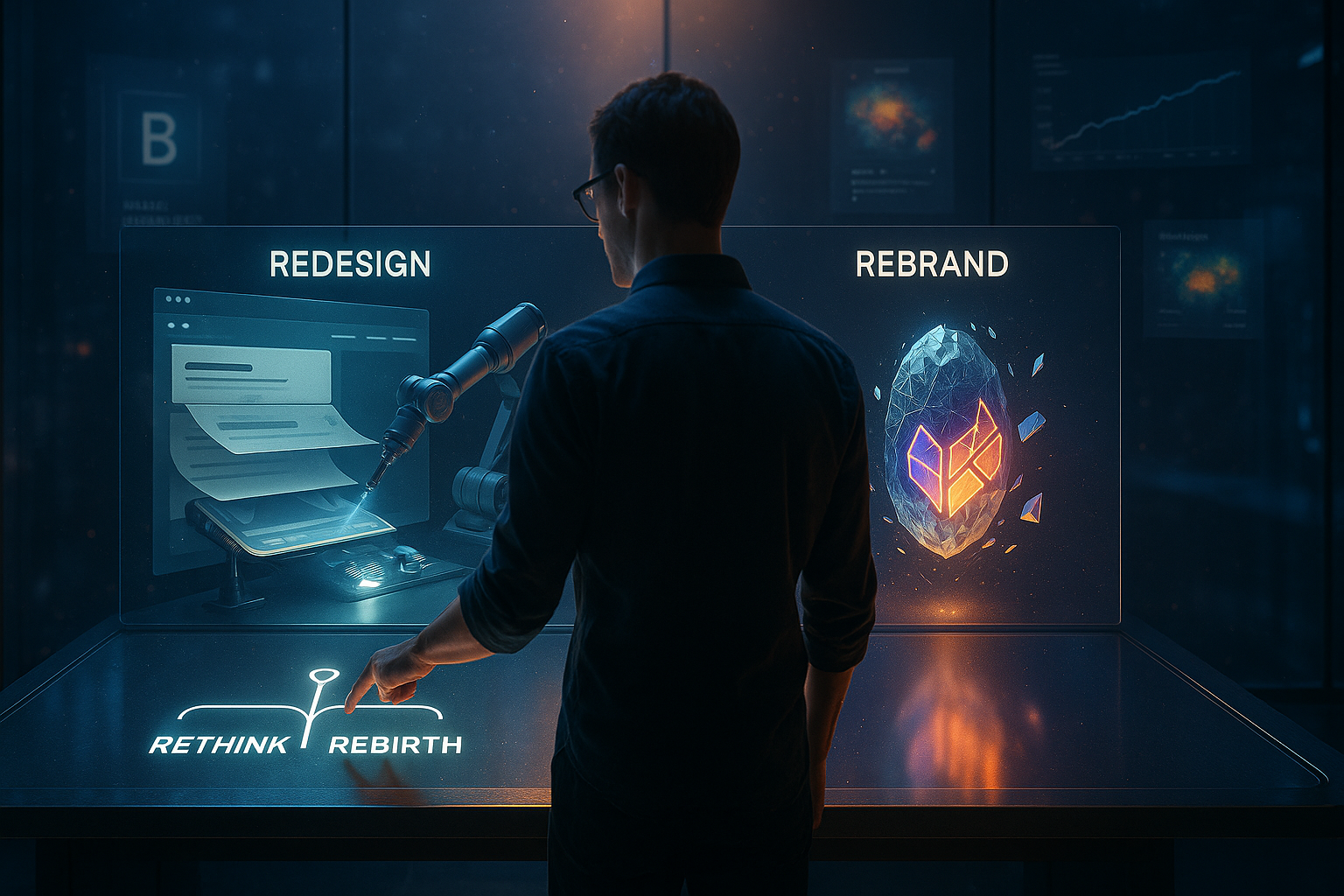
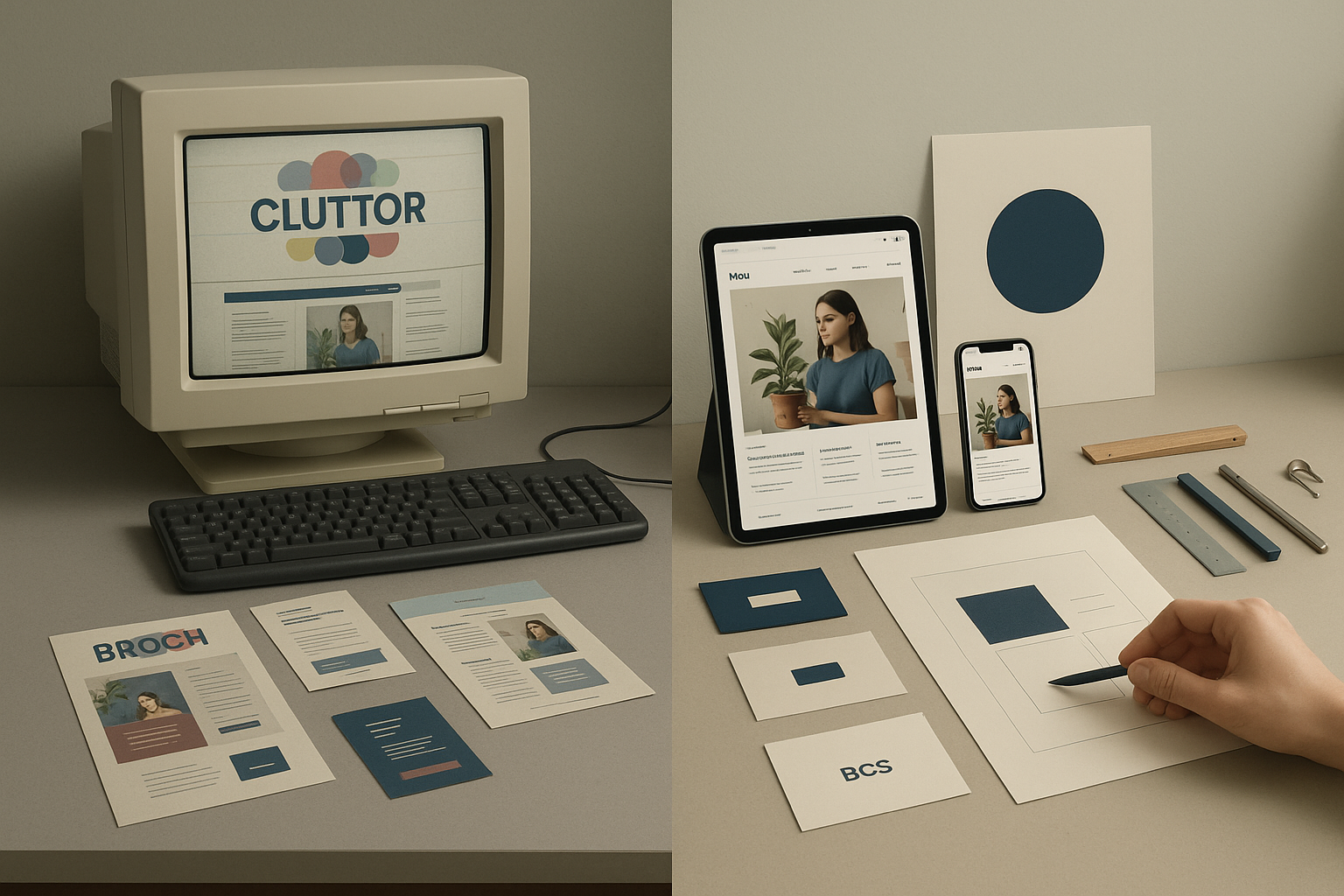
    • Website Redesign involves updating the design, layout, user experience, and sometimes backend infrastructure while keeping the brand identity largely intact.
    • Rebranding, on the other hand, involves a complete shift in brand identity—logos, messaging, target audience, and more—often accompanied by a fresh website build.

    Here’s how to decide:

    • Redesign if: Your branding is still strong, but your site looks outdated or is difficult to navigate.
    • Rebrand if: You’ve outgrown your original mission, shifted markets, or your brand no longer resonates with your audience.
    The Role of Branding in Today’s Competitive Market

    Branding is no longer just for big corporations. In fact, strong branding is a major growth driver for small and medium-sized businesses (SMBs). A well-branded business builds trust, loyalty, and authority in its niche.

    Grow Business

    At Hezemon, we’ve helped numerous startups and SMBs evolve from “just another company” into memorable brands. Our approach includes:

    • Consistent visual identity (colors, fonts, logo, and style)
    • Clear messaging and tone of voice
    • Modern web design that reflects the brand personality
    • User journeys optimized for trust and conversion

    This brand-first approach results in greater customer confidence and higher conversion rates, especially when paired with a strong SEO foundation.

    Latest Web Design Trends to Consider in 2025

    When you’re thinking about a website redesign or rebrand, it’s essential to stay aligned with current design trends. Today’s users are visually sophisticated and have high expectations.

    Here are some of the top design trends dominating in 2025:
    1. Minimalist Design
      Less is more. Clean interfaces, plenty of whitespace, and focused content make for faster loading and easier navigation.
    2. Dark Mode
      Not just stylish—dark mode also saves energy on OLED screens and reduces eye strain. Many users now prefer it as their default view.
    3. Neomorphism
      A modern twist that blends skeuomorphism and flat design, neomorphism brings a soft, realistic feel to UI components.
    4. Micro-animations and Interactions
      Small animations—like buttons changing color or icons responding to clicks—enhance the user experience by making the site feel more alive.
    5. Custom Illustrations and Videos
      Original visuals speak louder than stock images. They help communicate brand values and keep visitors engaged longer.

    Hezemon incorporates these trends thoughtfully, ensuring your site isn’t just stylish—but strategic.

    Success Story: Transforming Traffic & Trust

    Let’s look at one of our recent redesign projects.

    Client: A Hyderabad-based logistics startup
    Challenge: Their old site was clunky, slow, and virtually invisible in search results.
    Our Solution: We redesigned the website with a minimalist, mobile-first approach. We optimized their content for SEO, embedded interactive features, and modernized the UI with dark mode support.

    Results in 3 Months:
    • 210% increase in organic traffic
    • 42% increase in lead conversion
    • 3x average session duration

    This transformation didn’t require a full rebrand—just a smart redesign and a focus on user-centric functionality.

    Why Your Website Might Not Appear on Google

    Being invisible on search engines is a common complaint among businesses. Even a beautiful website can struggle to rank if not built with SEO in mind.

    Common issues include:
    • No meta tags or headers
    • Poor page speed performance
    • No mobile optimization
    • Thin or duplicate content
    • No backlinks or domain authority

    At Hezemon, every web design project includes basic SEO implementation: keyword optimization, alt tags, mobile testing, and fast-loading frameworks. We ensure your digital presence is not just aesthetically strong—but technically sound.

    Why Hezemon Is the Best Partner for Your Redesign

    Here’s why businesses trust us as their go-to web designing company in Hyderabad:

    • Decade of Experience: Our team has helped over 300 businesses across industries.
    • End-to-End Solutions: From design to deployment to maintenance—we handle it all.
    • Custom-Crafted Designs: No templates. We build based on your business goals and target audience.
    • Cutting-Edge Tools: We use React, Next.js, Figma, WordPress, and other modern tools.
    • SEO-Ready Builds: Every site we deliver is optimized for speed, visibility, and conversions.
    Is It Time for Your Business to Evolve?

    Your competitors are investing in their online presence. If your website is outdated, difficult to navigate, or invisible on search engines—it’s time to act.

    A redesign or rebrand isn’t just a visual upgrade—it’s a strategic move to reach more people, convert more leads, and grow your business.

    FAQs

    1. How long does a website redesign take?
      Typically 4–6 weeks, depending on the project complexity.
    2. Will I lose my current content or SEO ranking?
      No, our team ensures a smooth transition with improved structure and content optimization.
    3. Can I redesign my site without changing my brand?
      Yes. A redesign focuses on layout, usability, and performance, without altering your brand identity.
    4. What if I need a brand refresh too?
      We offer comprehensive branding packages including logo design, content strategy, and messaging.
    5. How much does a website redesign cost?
      Pricing depends on the scope, but we offer packages for startups and SMEs that deliver strong ROI.

    Final Thoughts

    In the battle between redesign and rebranding, the right choice depends on your goals, audience, and current performance. A simple redesign may be enough to modernize your website and attract new leads. But if your entire brand identity feels outdated or misaligned with your mission—it may be time for a full rebrand.

    At Hezemon, we don’t just create websites—we create powerful digital experiences that connect, convert, and grow businesses.

  • How to Make the Most of 6 Hours and 58 Minutes: Winning the Digital Attention War

    How to Make the Most of 6 Hours and 58 Minutes: Winning the Digital Attention War

    Every day, the average person spends 6 hours and 58 minutes online—scrolling, browsing, liking, sharing, and searching. For digital marketers, this isn’t just a statistic—it’s a battleground for attention. The attention span is short, the competition is fierce, and the stakes are higher than ever.

    To stand out in this digital chaos, your brand must master three things:

    1. How to increase brand visibility online
    2. Digital marketing strategies for higher screen time engagement
    3. Best practices to capture online user attention

    Let’s explore how you can turn those nearly seven hours into brand gold.

    Grow Business

    Why 6 Hours and 58 Minutes Matter

    Think about it: almost 7 hours of screen time per user, per day. That’s a massive window to build brand equity, drive conversions, and create loyal followers. However, with countless brands competing for the same attention, simply being present isn’t enough.

    To make those minutes truly count, your digital marketing strategy needs to be intentional, personalized, and relentlessly optimized.

    1. How to Increase Brand Visibility Online

    a. Optimize for Search (SEO)

    First and foremost, if people can’t find you, they can’t engage with you. That’s why search engine optimization remains the single most effective tactic to increase brand visibility online.

    • Use high-density keywords throughout your content. Phrases like how to increase brand visibility online, screen time engagement, and capture online user attention should appear naturally.
    • Enhance your meta tags. Your title tags, meta descriptions, and image alt texts should all reflect your core keywords.
    • Go long-tail. Instead of just “digital marketing,” try “digital marketing strategies for higher screen time engagement” to match specific search intent.

    b. Be Omnipresent on Social Media

    Today, most screen time is spent on social platforms. Therefore, your brand needs to show up frequently—and more importantly—authentically.

    • Post stories, reels, and carousels that entertain or inform.
    • Use trending audio and relevant hashtags to expand organic reach.
    • Partner with micro-influencers whose followers match your ideal customer persona.

    c. Get on Google’s Good Side

    Beyond search rankings, Google visibility plays a key role in online branding.

    • Set up and maintain a Google Business Profile with accurate info, updated visuals, and active reviews.
    • Share regular blog content and participate in forums like Quora and Reddit—but avoid spammy promotion.
    • Encourage happy customers to leave Google reviews. It not only builds trust but also boosts local SEO rankings.
    2. Digital Marketing Strategies for Higher Screen Time Engagement

    Once people find you, the next challenge is to keep them engaged. Here’s how:

    a. Behavioral Email Marketing

    Email is far from dead. In fact, it’s thriving—especially when it’s behavior-driven.

    • Trigger emails based on user actions (cart abandon, clicks, page visits).
    • Personalize subject lines and content to boost open rates.
    • Make your emails visually appealing and mobile-friendly, with clear CTAs and short, punchy content.

    b. Create Interactive Content

    If you want your audience to spend more time with your brand, don’t just talk at them—talk with them.

    • Launch interactive quizzes, polls, or assessments.
    • Host live sessions on Instagram or LinkedIn featuring thought leaders or your internal experts.
    • Introduce gamified experiences in your app or website (e.g., badges, leaderboards, spin-the-wheel discounts).

    c. Use Short-Form Video to Your Advantage

    Today, video dominates screen time—especially short-form content. Platforms like TikTok, Instagram Reels, and YouTube Shorts are perfect for delivering bite-sized brand stories.

    • Keep videos under 60 seconds for higher completion rates.
    • Grab attention in the first 3 seconds with a hook or bold visual.
    • Always close with a strong call-to-action (CTA).

    Pro tip: Add subtitles. A staggering 85% of videos are watched without sound.

    digital strategies

    3. Best Practices to Capture Online User Attention

    Now that you’ve attracted and engaged your audience, how do you hold their attention?

    a. Follow the 3-Second Rule

    You have 3 seconds to make a first impression—so make it count.

    • Lead with strong, curiosity-driven headlines like “You’re Wasting 6 Hours Online—Here’s How to Use Them Better.”
    • Use emojis, bullet points, and bold formatting for quick scanning.
    • Eliminate unnecessary fluff and get to the value fast.

    b. Prioritize Personalization

    Generic is forgettable. Personalized content is sticky.

    • Segment your audience based on behavior, interests, or past purchases.
    • Use dynamic content and remarketing ads to show users exactly what they care about.
    • Recommend products or services based on browsing history or previous actions.

    c. Speed Is Everything

    Finally, remember: slow sites = lost attention.

    • Your website should load in under 3 seconds, especially on mobile.
    • Avoid annoying popups or auto-play features that disrupt UX.

    Use smart layout design—highlight CTAs, keep visuals clean, and guide users with a clear visual flow.

    Final Thoughts: Time Is the New Currency

    In today’s digital economy, attention is more valuable than money. And with nearly 7 hours of screen time at stake, your brand has a huge opportunity to capture, engage, and convert.

    To make the most of it:

    • Double down on how to increase brand visibility online through search and social.
    • Apply digital marketing strategies for higher screen time engagement like interactive content and video.
    • Implement best practices to capture online user attention, including speed, personalization, and compelling content.

    You don’t need to be the loudest brand—just the smartest. Win the digital attention war by showing up, standing out, and speaking directly to your audience’s needs.


  • From Invisible to Unstoppable: How One Brand 3Xed Leads with an Integrated Digital Strategy

    From Invisible to Unstoppable: How One Brand 3Xed Leads with an Integrated Digital Strategy

    In today’s digital world, showing up online is not enough. You also need to stand out and convert.

    Unfortunately, many B2B brands face the same challenge. Their SEO, email marketing, paid ads, and website design operate in silos. As a result, their marketing feels disconnected and inconsistent.

    The outcome? Low visibility, wasted budget, and underperforming lead generation.

    This is exactly where integrated digital marketing can change the game.

    In this B2B digital marketing case study, we’ll show how one mid-sized SaaS company tripled its qualified leads in six month by aligning all digital channels under a single strategy.

    Grow Business

    Scattered Tactics, No Strategy

    Our client was a B2B SaaS provider offering employee performance software. Although the product had strong capabilities, their digital visibility was weak.

    Here’s what wasn’t working:

    • Their SEO lacked structure and keyword intent
    • Email marketing was inconsistent and unsegmented
    • Paid ads ran without tracking or alignment
    • Their website design failed to build trust or drive action

    Despite spending on multiple marketing activities, they were not seeing real results. Therefore, they didn’t need more tools—they needed a clear, connected strategy that worked across all channels.

    How We Built an Integrated Digital Marketing Strategy

    To solve this, we developed a unified plan across all key digital touchpoints. This included:

    • SEO
    • Email marketing
    • Paid advertising
    • Brand design and messaging

    Each channel supported the next. Consequently, we created a lead-focused marketing engine with compounding results.

    Microsoft Office 365 Reseller

    1. SEO Overhaul: Driving Organic Traffic That Converts

    We began by optimizing their SEO strategy. The main goal was to attract bottom-of-funnel traffic and improve technical performance.

    Our approach:
    • Created blog posts targeting high-intent keywords like OKR tracking tools and performance review software
    • Enhanced Core Web Vitals and page speed
    • Linked blog content to demo and service pages for better navigation and conversion
    Result:

    As a result, organic traffic grew by 64% in just 90 days.

    Why it worked:

    Instead of only bringing in visitors, SEO became a dependable source of qualified B2B leads.

    2. Email Marketing: From Blasts to Targeted Journeys

    Next, we revamped their email content strategy. Rather than sending the same message to everyone, we introduced segmentation and behavior-based journeys.

    What changed:
    • New leads received a five-step onboarding sequence
    • Inactive leads were re-engaged based on past activity
    • Newsletters were built from blog content to reinforce SEO
    Results:
    • Open rates jumped from 17% to 31%
    • Reply rates more than doubled
    Takeaway:

    When emails are relevant, segmented, and timely, they perform significantly better—even in B2B.

    3. Paid Ads and Retargeting: From Guesswork to Precision

    Previously, their paid ads lacked direction and proper measurement. Therefore, we paused the existing campaigns and launched a full-funnel strategy instead.

    What we did:
    • Used LinkedIn Ads to target decision-makers by job title and industry
    • Ran Google Ads aligned with SEO keywords
    • Created Facebook and Instagram retargeting campaigns to re-engage visitors

    In addition, we redesigned all ad creatives to ensure visual and message consistency.

    grow business

    Results:
    • ROAS increased from 1.8x to 5.2x
    Why it worked:

    By aligning paid ads with both SEO and email messaging, we created a seamless experience that converted more leads.

    4. Design and Messaging: Building Trust at Every Touchpoint

    We also refreshed the brand’s design to boost credibility and increase conversion rates.

    Improvements included:

    • Strong CTAs across every landing page
    • Testimonials and client logos to build trust
    • Consistent visual design across emails, ads, and website

    Unified message across channels:

    “Modern performance management, made easy.”

    Why it matters:

    A clear and cohesive design reinforces trust, which is crucial in B2B lead generation.

    The Results: Real Growth in Just 6 Months

    The integrated strategy delivered measurable and compounding growth across all metrics:

    • 3X increase in qualified leads
    • 64% increase in organic traffic
    • 5.2X return on ad spend (ROAS)
    • 2X boost in email engagement
    • 35% drop in bounce rates on landing pages
    Each channel amplified the next:
    • SEO brought in high-intent visitors
    • Email nurtured and converted those leads
    • Ads retargeted and reactivated users
    • Design built trust and improved conversion rates

    Why Integrated Marketing Works in B2B Lead Generation

    This case study proves a clear point: disconnected marketing tactics don’t scale.

    To grow consistently, every channel—SEO, email, paid ads, and design—must align under one strategy.

    Key benefits of integrated marketing:
    • Improved performance across all platforms
    • Lower cost per lead and better ROI
    • Unified brand message and experience
    • Easier tracking with shared analytics
    • Scalable lead generation model

    Final Takeaways for B2B Marketers

    If you want to generate consistent leads, focus on these proven steps:

    1. Align your SEO, email, and ads under one strategy
    2. Use behavior-based email workflows for nurturing
    3. Maintain consistent branding across all touchpoints
    4. Run paid ads that reinforce your organic messaging
    5. Measure performance across all channels in one dashboard

    With a well-structured, integrated approach, your brand won’t just get traffic—it will gain qualified B2B leads and sustainable growth.


  • One Brand. One Strategy. One Team: The Power of Unified Services

    One Brand. One Strategy. One Team: The Power of Unified Services

    In today’s ultra-competitive digital world, many businesses juggle multiple vendors—one for web design, another for branding, and yet another for social media. The result? Disconnected messaging, missed deadlines, and inconsistent brand identity.

    That’s why more companies are realizing the full-service agency benefits for business branding.

    Instead of hiring separate teams, modern businesses are choosing an all-in-one creative team for brand success—a unified group that delivers integrated design, development, and marketing services under one cohesive strategy.

    The Full-Service Advantage: Everything Under One Roof

    A full-service agency offers a wide range of creative and digital solutions, including:

    • Website design and development

    • Branding and identity creation

    • SEO and content strategy

    • Social media marketing

    • Paid advertising and performance analytics

    The real value lies not just in offering all services, but in how seamlessly they work together. The full-service agency benefits for business branding extend far beyond convenience—they ensure your messaging, visuals, and campaigns are aligned from start to finish.

    Grow Business

    Unified Thinking Creates Brand Consistency

    When designers, developers, and marketers collaborate under one roof, the output is consistent, clear, and results-driven. Businesses that are choosing an all-in-one creative team for brand success gain access to:

    • Stronger brand clarity

    • Faster execution across campaigns

    • Fewer communication breakdowns

    • Better return on investment (ROI)

    This kind of synergy enhances the effectiveness of integrated design, development, and marketing services, making your brand voice consistent across all platforms.

    Real-World Example: How One Brand Rebuilt with Unified Services

    A mid-sized real estate firm in Hyderabad was working with four different vendors—one for their website, another for SEO, a third for branding, and a fourth for paid ads. The result?

    • A poor user experience on their site

    • Inconsistent visual identity across platforms

    • Low lead conversion rates

    After partnering with a full-service agency that offered integrated design, development, and marketing services, the transformation was immediate:

    • Website speed improved by 60%

    • Branding became more polished and professional

    • Ad campaign ROI increased 4X in just three months

    This is a clear example of the measurable full-service agency benefits for business branding.

    Breaking Down the Power of Integrated Services

    Let’s explore how each service contributes to your brand success when unified:

    1. Design
    Your brand’s visual elements are consistent and on-message across all assets—web, print, and digital.

    2. Development
    Developers build websites and platforms that are optimized for performance, speed, and user experience—while aligning closely with marketing goals.

    3. Marketing
    Marketers leverage design and tech insights to craft campaigns that speak to your audience and convert effectively.

    This type of cross-functional collaboration only comes with integrated design, development, and marketing services, and it’s a major reason why brands are choosing an all-in-one creative team for brand success.

    The Risks of Using Multiple Vendors

    Working with separate agencies or freelancers can lead to:

    • Creative misalignment

    • Duplicated efforts and wasted budget

    • Lack of accountability

    • No centralized KPIs or reporting

    These are issues that full-service teams eliminate. The full-service agency benefits for business branding include more control, transparency, and unified execution.

    Why Growing Businesses Need Unified Services

    As your business grows, so does the need for consistency. Whether you’re a SaaS startup or a traditional company expanding into digital, you need integrated design, development, and marketing services that scale with you.

    From landing pages to ad creatives, everything should feel like it comes from one brand voice. This cohesion builds credibility and trust with your audience—and it’s exactly why forward-thinking companies are choosing an all-in-one creative team for brand success.

    Signs You’re Ready for a Full-Service Team

    Consider making the switch if:

    • Your messaging feels inconsistent across channels

    • You’re constantly coordinating between freelancers or agencies

    • Campaigns are slow to launch

    • You’re not seeing enough ROI from your marketing

    In these cases, the full-service agency benefits for business branding can make a major difference in both performance and peace of mind.

    Conclusion: One Brand. One Strategy. One Team.

    Your brand isn’t just a logo or a website—it’s the total experience your audience has with your business. From the first Instagram ad they see to the form they fill out on your site, everything must feel consistent, clear, and compelling.

    That’s only possible with integrated design, development, and marketing services powered by a unified team. If you’re serious about scaling your brand and standing out in your industry, it’s time to start choosing an all-in-one creative team for brand success.

    When every part of your brand works together, the results are not just better—they’re transformational.

  • Branding + Web + Design Overhaul: A Full-Service Transformation Case Study

    Branding + Web + Design Overhaul: A Full-Service Transformation Case Study

    When does a business truly evolve?

    Not when it changes a logo.
    Not when it launches a new website.

    But when branding, web design, and creative strategy align—creating a unified transformation that reflects its true potential.

    This is a complete brand and website makeover case study that shows how one client partnered with our full-service creative agency to redefine its identity, build digital credibility, and unlock rapid growth.

    If you’re wondering what a true 360° overhaul looks like—you’re in the right place.

    The Client: A Boutique Tech Firm with Big Vision

    Our client, a mid-sized tech firm specializing in AI-driven logistics, faced three critical challenges:

    1. Outdated branding that didn’t reflect their innovation

    2. A non-responsive website that failed to convert leads

    3. A lack of visual consistency across their digital presence

    They didn’t just need a makeover—they needed a transformation. That’s when they approached us, a branding and web design agency for business growth, to reimagine their brand from the ground up.

    Grow Business

    Step 1: Discovery & Audit

    Before jumping into design, we started with strategy.

    Our team conducted a thorough brand audit, competitor analysis, and a series of stakeholder interviews to uncover:

    • What wasn’t working

    • What needed improvement

    • What customers really wanted

    Key Findings:
    • Messaging lacked clarity and emotional resonance

    • Visual identity didn’t reflect their tech-forward positioning

    • Website traffic was decent, but conversion rates were extremely low

    That’s when we proposed a full-scale solution—a complete brand and website makeover case study approach. Not just change—evolution.

    Digital Marketing Services

    Step 2: Branding Overhaul

    Our creative team focused on redefining the brand’s core identity.

    Deliverables Included:
    • A new logo inspired by neural networks and data streams

    • A modern color palette combining trust (blue) with innovation (electric green)

    • A dynamic typography system for technical storytelling

    • A refreshed brand voice guide built around clarity, authority, and innovation

    This wasn’t just about aesthetics. We aimed to build emotional resonance—the foundation of any true full-service creative agency project success story.

    Step 3: Website Redesign & Development

    Next came the website—the brand’s digital storefront and sales engine.

    Our Website Goals:
    • Mobile-first, lightning-fast performance

    • Clear, conversion-focused messaging

    • Seamless integration with CRM and analytics tools

    • Scalable CMS for the internal marketing team

    We rebuilt the website using a headless CMS architecture and React-based components—prioritizing speed, SEO, and flexibility.

    Results:
    • Bounce rate dropped by 42%

    • Conversion rate increased by 3.5x in just 3 months

    • Average session duration doubled

    This alone could stand as a strong branding and web design agency for business growth success story—but we went further.

    Microsoft Office 365 Reseller

    Step 4: Graphic Design & Brand Assets

    With the new identity established, we rolled out a cohesive brand system, including:

    • Social media templates

    • Investor pitch decks

    • Sales collateral

    • LinkedIn banners for team members

    • A refreshed UI design for the client’s core product

    This unified visual language elevated the brand across every touchpoint. Prospects engaged more seriously. Investors took notice. And employees felt a renewed sense of pride.

    This was the essence of a full-service creative agency project success story—strategy, execution, and measurable results.

    The Transformation at a Glance
    Metric Before After
    Brand Recall Low Strong & Recognizable
    Website Conversion Rate 0.9% 3.2%
    Mobile Responsiveness Score 49/100 92/100
    Average Time on Site 38 seconds 2 minutes 10 seconds
    Internal Brand Adoption Fragmented Unified

    This wasn’t just another project. It was a living, breathing complete brand and website makeover case study in motion.

    Why Full-Service Matters

    Many businesses try to DIY branding—or hire different vendors for design, development, and marketing. The result? Disconnected elements that fail to communicate a consistent identity.

    As a branding and web design agency for business growth, we ensure that every element—from the logo to the landing page, from tone to typography—speaks the same language.

    That’s the power of a full-service creative agency project success story: everything aligns.

    Key Takeaways from This Case Study
    • Your brand isn’t just visual—it’s emotional

    • A beautiful website without clear messaging is wasted potential

    • Cohesion across all touchpoints builds trust and credibility

    • A unified transformation delivers measurable ROI

    So if you’re still tweaking your old logo or wondering whether your website just needs a few updates—maybe you don’t need a change.
    Maybe you need an overhaul.

    Final Thoughts

    This complete brand and website makeover case study proves what’s possible when creativity, strategy, and execution work in sync.

    Whether you’re a startup aiming to stand out or an established company ready to evolve, don’t settle for fragmented fixes. Partner with a branding and web design agency for business growth that delivers full-spectrum transformation.

    Because sometimes, a new logo changes nothing.
    But a new identity? That changes everything.