Author: hezemon_admin

  • Rebranding a Genome Valley Analytics Startup: Naming, Messaging, and a Visual System that Opened Enterprise Doors

    Rebranding a Genome Valley Analytics Startup: Naming, Messaging, and a Visual System that Opened Enterprise Doors

    By Hezemon Technologies — Hyderabad

    Genome Valley is where Hyderabad’s biotech braintrust meets global ambition. But for one fast-growing analytics startup, enterprise buyers still saw “interesting tool,” not “trusted partner.” This is the story of how Hezemon transformed an under-positioned product into an enterprise-ready brand—through sharp naming, a tight messaging architecture, and a visual system engineered for boardroom credibility.

    The Challenge: Brilliant product, blurry brand

    Our client (anonymized) analyzed clinical, RWE, and pharmacovigilance data for biopharma teams. Yet three issues blocked enterprise deals:

    • Generic name that sounded like a feature, not a company.
    • Fragmented story—different teams pitched different value props.
    • Inconsistent visuals that felt “startup scrappy,” not procurement-ready.

    They needed a pharma analytics startup branding agency in Genome Valley that could move from ambiguity to authority, fast. Enter Hezemon.

    Grow Business

    Our Method: Assess → Build → Converge

    1) Naming & Architecture (Week 1–2)

    At Hezemon, we led a B2B naming and messaging workshop in Hyderabad that founders love—an intensive one-day session with leadership, product, sales, and regulatory teams. The format was fast, structured, and outcome-driven. During the workshop, we clarified:

    • Core promise and big “why now”
    • ICPs across biostatistics, clinical ops, safety, and IT security
    • Naming territories (data lineage, signal clarity, compliance trust)

    We screened 90+ names for linguistics, domain availability, and trademark risk. The final name (redacted) signaled clarity + compliance—short, pronounceable, and enterprise-grade.

    Outputs: Name shortlist, story spine, elevator pitch, 5-slide positioning deck, trademark pre-check, and domain strategy.

    2) Messaging System (Week 2–3)

    Enterprise buyers need layered clarity. We built a messaging architecture with three deliberate zoom levels:

    • Exec Narrative (30,000 ft): Risk reduction, time-to-insight, audit-ready transparency
    • Director Narrative (10,000 ft): Workflow impact—protocol deviations, SAE signal detection, submission quality
    • User Narrative (Runway): Use-case micro-stories, before/after, and expected lift

    We codified a one-line value prop, competitive angles, objection handling, and regulated-language guardrails. Sales got approved copy blocks for emails, LinkedIn, first calls, and security questionnaires.

    3) Visual System (Week 3–4)

    To cross the credibility gap, we designed an enterprise visual identity for biotech companies Hyderabad teams could deploy on day one:

    • Logotype & wordmark with medical-grade geometry
    • Color system balancing clinical blues with “enzyme green” accents for signal detection
    • Data-glyph motif inspired by chromatograms & survival curves
    • Typography optimized for dense tables and submission screenshots
    • Slide library (investor, sales, regulatory) with proof-friendly layouts
    • Dashboard UI kit to harmonize in-product visuals with brand
    • Website blocks (hero, use-cases, security & compliance, validation studies)
    • Sales pack (one-pager, PDF case briefs, SOC2 & GxP trust page patterns)
    4) Launch & Enablement (Week 4–6)

    Brands don’t lift themselves; teams do. We shipped:

    • Brand governance playbook + Figma library
    • Outreach assets for ABM pilots (CROs, pharmacovigilance, and clinical ops)
    • Founder talk-track + demo storyboard
    • Salesforce/HubSpot copy and field mappings for consistent narrative

    The Turnaround: From “ping us later” to pilot conversations

    Within the first quarter post-launch, the startup saw:

    • Faster enterprise traction: SDRs booked more first meetings because messaging spoke the buyer’s language (not just the product’s features).
    • Smoother procurement reviews: Security & compliance pages answered questions before they surfaced.
    • Higher perceived value: The new name + visuals reframed them from “tool vendor” to specialist partner.

    We’ll let the language speak: the brand felt audit-ready, regulatory-aware, and scientifically literate—exactly what risk-averse biotech buyers need to say “yes” to pilots.

    Why it worked (and why it lasts)

    1. Genome Valley context: As a pharma analytics startup branding agency Genome Valley, Hezemon tuned the story to local realities—talent pools, partner ecosystems, and India-origin trust signals for US/EU buyers.
    2. Message discipline: A single spine, many use-cases. Sales, marketing, and product finally sounded like one company.
    3. Design for proof: Visuals prioritized evidence—figures, tables, methods—over vague gradients and fluff.
    4. Governance from day one: Guardrails, templates, and UI kits ensured scale without slide drift.

    Founder’s quick checklist

    • Does your name signal your category and your advantage?
    • Can a CFO grasp your value prop in one sentence?
    • Do your slides make proof easy to see (not buried in 8pt text)?
    • Are your security & compliance answers pre-written and brand-consistent?
    • Can SDRs pull approved snippets for emails, InMails, and first calls?

    If the answer isn’t a confident “yes,” you’re leaving enterprise doors closed.

    Azure Business Continuity with Site Recovery
    Hezemon | Azure Business Continuity with Site Recovery

    What we delivered (snapshot)

    • Naming + domain strategy
    • Positioning deck & messaging matrix
    • Visual identity system & data-glyph library
    • Sales + investor slide kits
    • Security/compliance page patterns
    • Website sections & ABM landing blocks
    • Demo storyboard + talk-track
    • Governance playbook & Figma components

    Ready to open enterprise doors?

    If you’re a Hyderabad-based founder targeting biopharma, CROs, or med-tech, Hezemon can help you sprint from interesting to inevitable. Whether you need a B2B naming and messaging workshop Hyderabad, a rapid repositioning, or a complete enterprise visual identity for biotech companies Hyderabad, we’ll bring the clarity, craft, and speed your next quarter demands.

    From the heart of Hyderabad to global boardrooms—let’s build a brand that gets you in the room.

  • From Hyderabad to the World: Digital Marketing Strategies for Exporters and Traders

    From Hyderabad to the World: Digital Marketing Strategies for Exporters and Traders

    Hyderabad has always been a hub for global trade and exports — from textiles and handicrafts to agriculture and processed foods. But in 2025, the way exporters attract buyers, distributors, and international partners has changed. Traditional trade fairs and cold outreach are no longer enough. Instead, success comes from digital-first visibility and targeted lead generation.

    At Hezemon Technologies, Hyderabad, we help exporters and traders go beyond borders with international digital marketing strategies that build global trust, attract quality buyers, and deliver measurable ROI.

    Why Exporters Need Digital Marketing in 2025

    Exporters today face a unique challenge. While global demand for Indian goods is rising, so is the competition. Buyers in Europe, the US, and the Middle East now research suppliers online before they respond to an email or pick up the phone.

    • A textile buyer in Germany will Google “handloom exporters in India” before contacting vendors.
    • A food distributor in Dubai will check product quality reviews and certifications online.
    • A handicraft retailer in the US will rely on social media content to evaluate authenticity.

    This makes international digital marketing for exporters in Hyderabad a critical growth lever. Without strong online visibility, even the best products risk being invisible in global markets.

    Digital Marketing Challenges Exporters Face

    Exporters often struggle with:

    • Low online visibility in global search engines.
    • Language and cultural barriers in international campaigns.
    • Limited digital expertise, with a reliance on traditional sales channels.
    • No structured lead nurturing, leading to drop-offs in buyer conversations.

    Hezemon’s role is to bridge this gap with targeted, ROI-driven campaigns that bring exporters closer to their global buyers.

    Key Strategies for Exporters and Traders

    1. SEO for Global Reach

    For exporters, ranking on Google is the new trade fair booth. Our specialized approach to SEO for agriculture and food product exporters in Hyderabad helps suppliers appear in global search results when buyers look for reliable partners.

    • Keyword targeting in international markets (e.g., “organic rice exporters India”).
    • Multilingual SEO for regions like the Middle East and Europe.
    • Technical SEO to optimize for global marketplaces.
    1. B2B Lead Generation for Textile & Handicraft Exporters

    The textile and handicraft industry thrives on trust, heritage, and uniqueness. Our campaigns focus on B2B lead generation for textile and handicraft exporters by:

    • Running targeted LinkedIn ads for international wholesalers and distributors.
    • Creating product catalogs optimized for digital platforms.
    • Hosting webinars and virtual trade showcases for overseas buyers.
    1. International Digital Marketing Campaigns

    To capture global attention, exporters need campaigns that resonate with buyers across cultures. Our expertise in international digital marketing for exporters in Hyderabad includes:

    • Paid advertising on Google and LinkedIn with geo-targeted filters.
    • Cross-border email marketing tailored to buyer intent.
    • Influencer marketing on Instagram and YouTube for handicraft and lifestyle products.
    1. Content Marketing for Credibility

    Global buyers want proof of quality. Exporters need content that builds trust:

    • Case studies on successful export partnerships.
    • Videos showcasing product quality, manufacturing processes, or artisan stories.
    • Blog posts on certifications, sustainability, and compliance.
    1. Conversion-Driven Website Design

    Your website is your global storefront. We design exporter websites that:

    • Showcase products with high-quality visuals.
    • Highlight certifications, trade licenses, and testimonials.
    • Include inquiry forms and chatbots for 24/7 buyer engagement.

    How Hezemon Technologies Helps Exporters

    As a digital marketing company in Hyderabad, Hezemon Technologies has worked with exporters across textiles, handicrafts, and agriculture. Our strategies are built on:

    • Global SEO campaigns that rank your business in overseas markets.
    • ABM-driven lead generation to target international buyers and distributors.
    • AI-powered personalization to nurture leads through email and LinkedIn.
    • Analytics-driven optimization to maximize ROI on every campaign.

    We don’t just create visibility — we create qualified buyer conversations that convert into real export orders.

    Final Word

    In 2025, exporters who rely only on trade fairs and distributors risk being left behind. The real winners are those who embrace digital-first, global-ready marketing strategies. Whether you’re in textiles, handicrafts, or agriculture, investing in SEO for agriculture and food product exporters in Hyderabad, or B2B lead generation for textile and handicraft exporters, ensures that your brand reaches the right international buyers.

    At Hezemon Technologies, we empower exporters to expand globally with international digital marketing for exporters in Hyderabad — helping you go from local roots to global markets.


  • From Empty Seats to Sold-Out Shows: How Event Marketing Boosted a Cultural Festival in Vizag

    From Empty Seats to Sold-Out Shows: How Event Marketing Boosted a Cultural Festival in Vizag

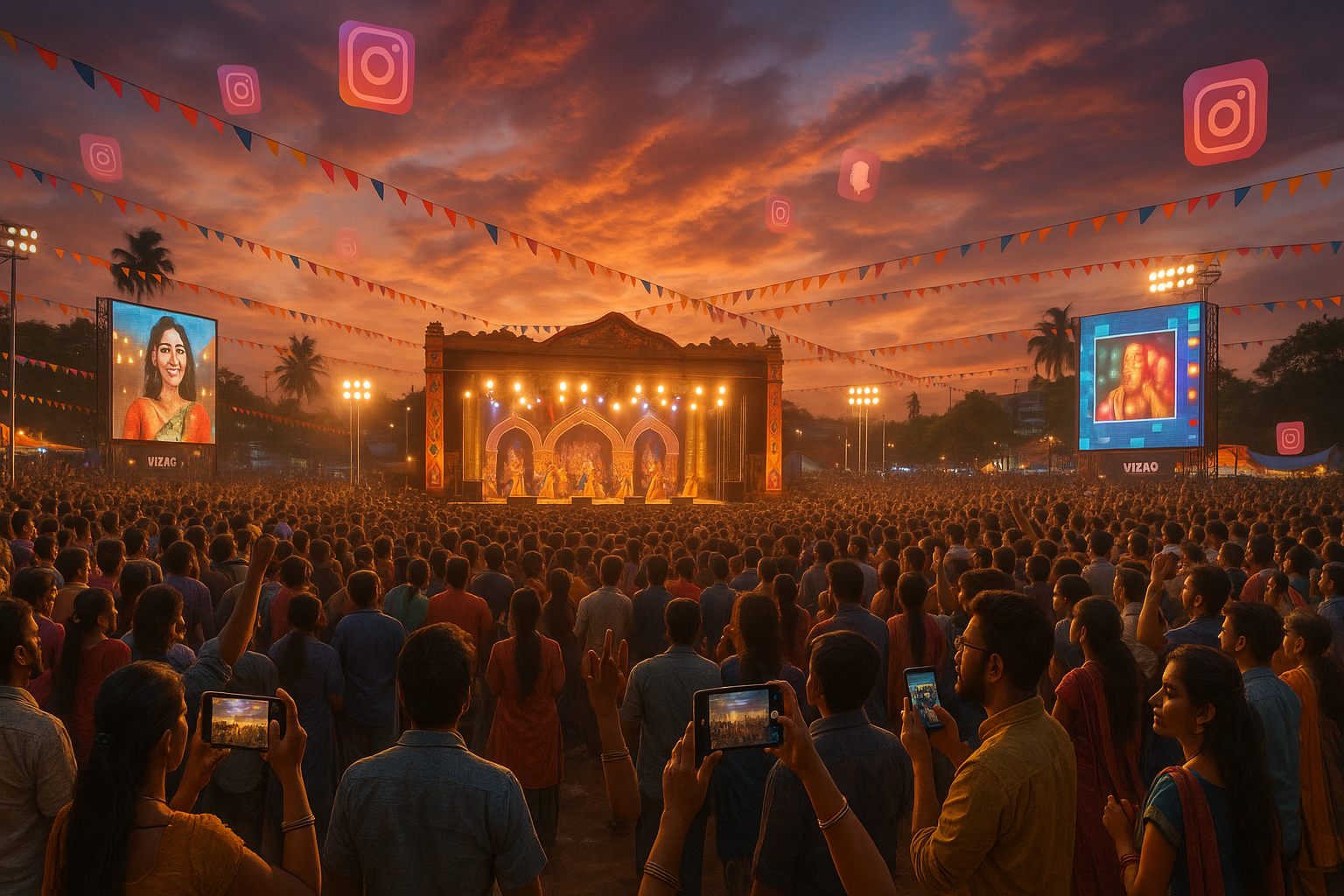
    Cultural festivals are the heartbeat of cities like Vizag, bringing together art, music, and community. But filling seats for these events is never easy. With competition from other entertainment options, organizers often struggle to sell tickets. That’s where event marketing strategies for cultural festivals in Vizag come in. By combining Instagram influencer marketing for events in Vizag and digital promotions for festival ticket sales, one cultural festival turned its challenge of empty seats into a roaring success with sold-out shows.

    Grow Business

    The Challenge: Empty Seats Despite Offline Buzz

    Even though the festival had a strong local reputation, ticket sales were poor in the initial weeks. Posters and word-of-mouth were no longer enough in 2025. The organizers realized they needed a digital-first approach. They had to use modern event marketing strategies for cultural festivals in Vizag that could create online buzz, attract youth, and build urgency around tickets.

    Strategy 1: Event Marketing Tailored for Vizag

    The first step was to rethink how to position the festival online. The team crafted a calendar of event marketing strategies for cultural festivals Vizag audiences love:

    • Localized storytelling: Using posts that connected the festival with Vizag’s culture, heritage, and pride.
    • Community engagement: Running polls, contests, and quizzes about Vizag’s traditions on social media.
    • SEO optimization: Targeting keywords like “cultural festivals in Vizag,” “event marketing Vizag,” and “digital promotions Vizag festival tickets.”

    This foundation ensured the campaign reached not only locals but also tourists planning to visit Vizag.

    Strategy 2: Instagram Influencer Marketing for Events in Vizag

    The game-changer was Instagram influencer marketing for events in Vizag. The festival partnered with local micro-influencers, food bloggers, and travel vloggers. These influencers created reels, stories, and posts showing:

    • Behind-the-scenes of rehearsals.
    • Local food and cultural stalls.
    • Sneak peeks of headlining artists.

    By tagging “#VizagFestival” and encouraging followers to share, the organizers amplified reach beyond their own channels. Influencers became authentic promoters, convincing people that this festival was the place to be.

    Why did it work? Because Instagram influencer marketing for events in Vizag taps into trust. Audiences believe local influencers more than ads. Each reel became a mini invitation, driving direct ticket clicks.

    Strategy 3: Digital Promotions to Drive Ticket Sales

    Alongside influencer campaigns, the team launched aggressive digital promotions for festival ticket sales. They used:

    1. Facebook & Instagram Ads – Targeting users in Vizag, nearby cities, and expats returning home. Ads highlighted limited-time discounts to create urgency.
    2. Google Search Ads – For keywords like “buy Vizag festival tickets” and “cultural events Vizag.”
    3. Email Marketing – Personalized reminders for people who showed interest but hadn’t purchased.
    4. WhatsApp Broadcasts – Sharing quick updates, offers, and schedules with local groups.

    These digital tactics made tickets accessible with just one click. By blending emotional storytelling with practical buying options, digital promotions for festival ticket sales skyrocketed conversions.

    The Result: From Struggle to Success

    The festival that once faced half-empty seats sold out in record time. Attendance jumped by 70% compared to the previous year. Social media was buzzing with photos, reels, and stories tagged at the venue. More importantly, the event became a case study in how event marketing strategies for cultural festivals in Vizag can make a real impact.

    digital strategies

    • Ticket sales doubled after influencer campaigns went live.
    • Website traffic increased 3X during the final week.
    • Social engagement created FOMO, ensuring last-minute ticket rush.

    This transformation proved that with the right blend of Instagram influencer marketing for events in Vizag and digital promotions for festival ticket sales, cultural events can thrive even in highly competitive markets.

    Key Takeaways for Event Organizers

    1. Think Digital-First – Offline posters are not enough; start with digital.
    2. Leverage Local Influencers – They add authenticity and trust.
    3. Run Targeted Ads – Smart ads reduce waste and maximize ticket ROI.
    4. Build Urgency – Limited-time offers, countdowns, and exclusive previews work.
    5. Keep Content Local – Showcase the pride and culture of Vizag to connect emotionally.

    Final Thoughts

    The success story of this Vizag cultural festival shows that event organizers can no longer rely on old methods. Event marketing strategies for cultural festivals Vizag are now digital-first. With the help of Instagram influencer marketing for events in Vizag and aggressive digital promotions for festival ticket sales, festivals can move from empty seats to packed audiences.

    If you are planning a festival, remember: today’s audience lives on social media, trusts influencers, and buys tickets online. Your job is to be present where they are. That’s how cultural festivals in Vizag can continue to grow, attract new crowds, and celebrate the city’s vibrant heritage.


  • Story: The SEO Journey of Varun and AI Content

    Story: The SEO Journey of Varun and AI Content

    1. The Big Question: Can Google Detect AI Content?

    Varun, an SEO manager, had a burning question:

    “If I use ChatGPT to write blog posts, will Google penalize my website?”

    He researched Google’s guidelines and discovered the truth:
    Google does not ban AI content. Instead, it cares about whether the content is helpful and high-quality.

    Example:

    • If Varun publishes a ChatGPT-written blog with copy-pasted text from competitors, it adds no new value → Google may ignore or down-rank it.
    • But if Varun uses AI to generate drafts, then adds his own insights and examples, the content is useful and ranks well.
    1. Quality Over Source: Google’s Golden Rule

    Google’s stance is simple:

    “We reward helpful, people-first content, no matter how it’s produced.”

    Varun realized the tool didn’t matter — quality was the real king.

    Example:

    • A blog titled “Best Biryani Restaurants in Hyderabad” written entirely by AI but never fact-checked could mislead readers.
    • But if Varun uses AI for structure, then personally visits 3 Biryani restaurants, takes photos, and adds real experiences, Google sees it as authentic and valuable.
    1. The EEAT Formula: How Google Measures Value

    Varun learned about EEAT (Experience, Expertise, Authoritativeness, Trustworthiness).

    He asked himself:
    “Does my AI content show real experience?”

    Example:

    • AI can write “How to bake a chocolate cake” in seconds.
    • But Google prefers content where Varun writes: “I tried this recipe last weekend, here’s what worked and what didn’t.”

    Adding personal touches made his article more trustworthy.

    1. How AI Can Help, Not Replace

    Varun started using AI as a supporting tool, not the entire content creator.

    Example workflow:

    1. AI Draft → Generate a blog outline with ChatGPT.
    2. Human Touch → Add real case studies, screenshots, or client results.
    3. SEO Optimization → Naturally place keywords, FAQs, and meta descriptions.
    4. Fact-Check → Verify data before publishing.

    This process gave Varun time-saving benefits without losing originality.

    1. The Danger of Spammy AI Content

    One of Varun’s colleagues tried the shortcut: publishing 100 AI blogs per week without editing.

    At first, traffic spiked. But soon, Google noticed the content was thin, repetitive, and unhelpful. Rankings dropped, and the site got less visibility.

    Lesson:
    AI content can hurt SEO if used only for mass production without value.

    1. Success Story: Blending AI + Human Expertise

    Varun did it differently. He used AI to speed up research and drafts but always added:

    • Real client stories
    • Original images
    • Step-by-step guides
    • His personal SEO experiments

    Google rewarded his site with higher rankings, because readers stayed longer and shared his posts.
    Example:
    Instead of just saying, “Google accepts AI content,” Varun wrote:

    • What Google’s guidelines say
    • A real case study of a website using AI
    • Practical tips for safe use

    This gave depth that pure AI text couldn’t match.

    1. The Final Realization

    Varun finally understood:

    “Google doesn’t care if my content is written by AI or me.
    It only cares whether my content helps people, solves problems, and shows real expertise.

    And with that, his SEO strategy became stronger than ever.

    Key Takeaway for SEO Users:

    • AI content is allowed.
    • Google rewards helpful, original, people-first content.
    • Use AI as a helper, not a replacement.
    • Always add human experience, fact-checking, and unique insights.

    Let’s build a step-by-step SEO checklist that you (just like Varun in the story) can follow before publishing AI content. This will keep it Google-friendly, people-first, and ranking ready.

    SEO Checklist for Publishing AI Content

    1. Define the Purpose First
    • Ask: “Why am I creating this content?”
    • Ensure it solves a real user problem.
      Example: If writing “Best Laptops for Students 2025”, your goal is to help students choose, not just dump specs.
    1. Generate a Draft with AI (But Don’t Stop There)
    • Use AI for outlines, introductions, FAQs, or summaries.
    • Treat it as a first draft, not the final article.
      Example: Let AI list 25 laptop models, but you review and select only the ones truly relevant.
    1. Add Human Expertise & Real Experience
    • Include personal insights, case studies, client results& experiences, or real product testing.
    • Mention what you’ve tried, tested, or learned.
      Example: Instead of just listing “MacBook Air is lightweight,” add: “I carried it daily to my university, and the battery lasted 8+ hours consistently.”
    1. Fact-Check Every Claim
    • Cross-check statistics, news, and references.
    • Remove AI “hallucinations” (fake facts AI sometimes invents).
      Example: If AI says “Laptop X costs $450,” confirm with the brand’s official site.
    1. Optimize for SEO Naturally
    • Place target keywords in title, first paragraph, subheadings, and meta description.
    • Use related keywords (LSI) to make content richer.
      Example: If your keyword is “best laptops for students”, also include “affordable laptops for college,” “study-friendly laptops,” etc.
    1. Make Content Engaging
    • Use headings (H2, H3), bullet points, examples, and visuals.
    • Add FAQs to cover search intent.
      Example: End your laptop article with FAQs like “Which laptop is best for engineering students?”
    1. Ensure Originality
    • Run plagiarism checks.
    • Rewrite in your own voice.
      Example: Instead of copying manufacturer descriptions, add your comparison table of pros & cons.
    1. Build Trust (EEAT)
    • Show author bio with expertise.
    • Link to trusted sources.
    • Add screenshots, images, or data charts.
      Example: If you claim “HP Pavilion lasts 10 hours,” show your test results with a screenshot.
    1. Final Review Before Publishing
    • Ask yourself:
      • “Is this content genuinely useful?”
      • “Would I share this with a friend?”
      • “Does it sound human and natural?”
    1. Post-Publishing SEO Checks
    • Monitor Google Search Console for impressions & clicks.
    • Update content regularly to keep it fresh.
      Example: Update “Best Laptops 2025” when new models launch mid-year.

    Golden Rule for SEO with AI

    AI + Human Editing = SEO Success
    AI saves time, but your expertise, fact-checking, and personalization make the content truly rank-worthy.

  • The Challenge of Patient Trust: How Digital Marketing Helped a Hyderabad Hospital Build Reputation Online

    The Challenge of Patient Trust: How Digital Marketing Helped a Hyderabad Hospital Build Reputation Online

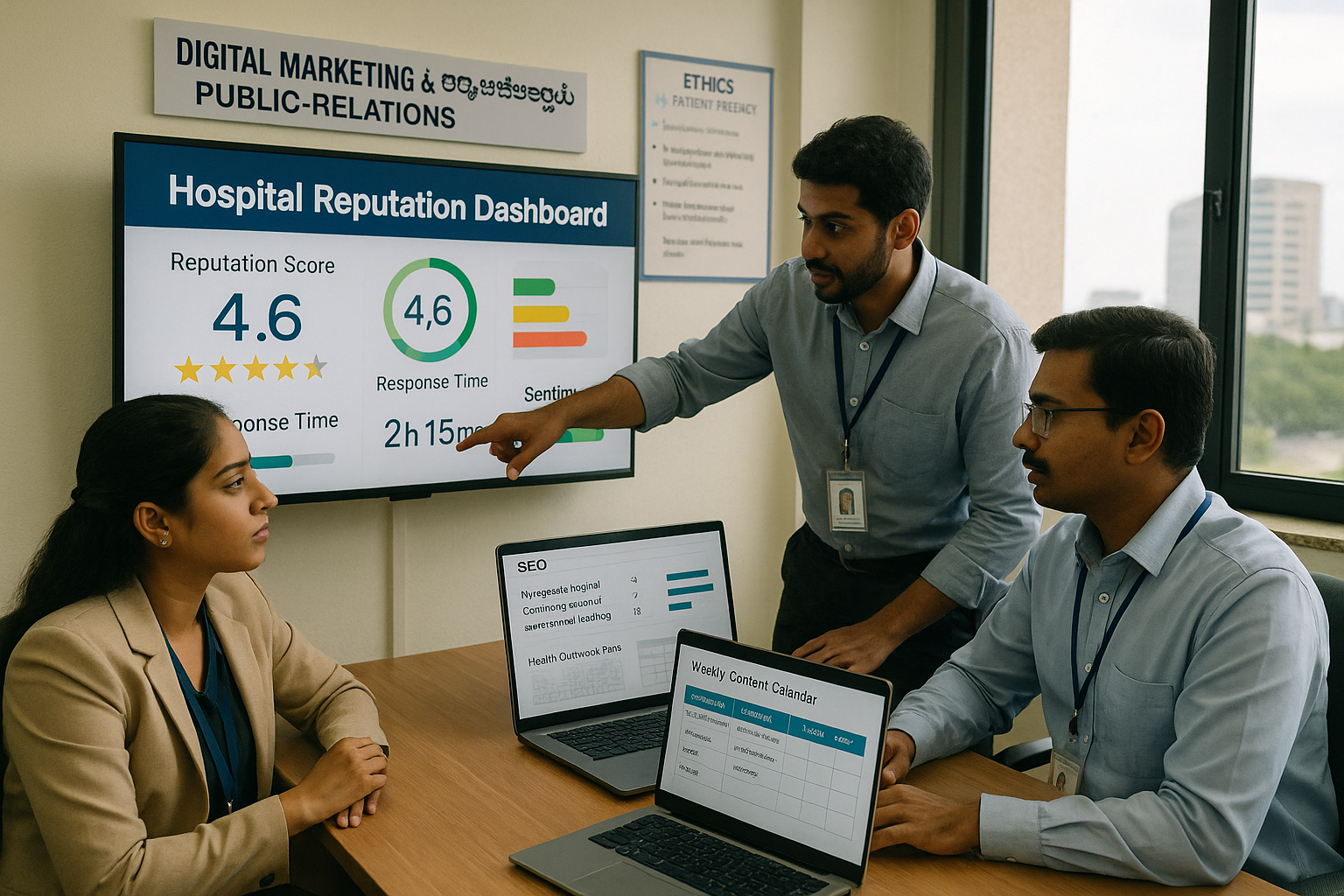
    In today’s digital-first world, patients don’t just walk into a hospital because of location or word-of-mouth. They search online, check reviews, compare services, and look for trust signals before making a decision. For hospitals in Hyderabad, this shift in patient behavior has created both a challenge and an opportunity.

    One hospital in Hyderabad faced this exact problem. Despite having excellent doctors and modern facilities, it struggled with low patient trust online. Negative reviews, poor visibility on Google, and lack of a digital presence were pushing potential patients towards competitors. That’s where digital marketing for hospitals in Hyderabad became the game-changer.

    Digital Marketing Services

    The Problem: Why Patient Trust Was Declining

    The hospital had three major challenges:

    1. Weak Online Reputation – Patients searching on Google or Practo found outdated information, inconsistent reviews, and very little engagement.
    2. Low Visibility in Search Results – Competing hospitals ranked higher for services like cardiology, gynecology, and emergency care.
    3. Lack of Patient Engagement – No structured campaigns, no email reminders, no social media updates, and almost zero patient education content.

    In healthcare, trust is everything. If patients don’t find credible information online, they quickly move on to the next option. That’s why online reputation management for healthcare in Hyderabad is now more important than ever.

    The Solution: How Digital Marketing Transformed the Hospital’s Image

    To solve these challenges, a strategic digital marketing plan was implemented step by step:

    1. Online Reputation Management (ORM)

    The first priority was to clean up the hospital’s online image. We:

    • Responded to old negative reviews professionally.
    • Collected positive feedback from satisfied patients.
    • Updated all listings across Google My Business, Practo, Justdial, and healthcare directories.

    This ORM approach instantly boosted trust. When new patients searched, they now saw genuine positive stories instead of scattered negative reviews.

    1. Healthcare SEO for Visibility

    The next step was to improve healthcare SEO and patient lead generation in Hyderabad. SEO helped the hospital appear for high-intent searches like:

    • best cardiology hospital in Hyderabad
    • gynecology services near me
    • emergency hospital Hyderabad

    We created optimized service pages, published blogs on patient care tips, and added FAQs. Within three months, the hospital ranked on the first page for over 25+ local healthcare keywords. This brought consistent patient enquiries and higher appointment bookings.

    1. Patient-Centric Content & Social Media

    Trust is not built by ads alone—it comes from education and communication. We created engaging healthcare content such as:

    • Weekly social media posts on wellness tips.
    • Doctor-led videos answering common patient questions.
    • Blog posts about treatments, recovery journeys, and preventive care.

    This content humanized the hospital and showed transparency. Patients began to see the hospital not just as a service provider but as a healthcare partner.

    1. Targeted Email Campaigns

    We implemented email campaigns for patient reminders, wellness newsletters, and seasonal health tips. These personalized messages kept patients engaged and improved repeat visits.

    For example, a diabetes awareness campaign not only improved appointment bookings but also positioned the hospital as a trusted authority in chronic care.

    The Results: Patient Trust Restored

    Within six months, the hospital saw:

    • 35% increase in patient enquiries from Google search.
    • 50% improvement in online reviews with positive feedback dominating search results.
    • Higher engagement on social media—patients sharing hospital posts, tagging friends, and leaving encouraging comments.
    • Steady patient lead generation with SEO-driven traffic converting into actual appointments.

    This proved that digital marketing for hospitals in Hyderabad is not just about ads—it’s about building credibility, trust, and long-term patient relationships.

    digital strategies

    Why This Matters for Hospitals in Hyderabad

    Healthcare is deeply personal. Patients in Hyderabad don’t just look at qualifications—they look for empathy, transparency, and credibility. That’s why online reputation management for healthcare in Hyderabad is becoming a necessity, not a luxury.

    By combining ORM, healthcare SEO and patient lead generation in Hyderabad, and patient-focused content, hospitals can create a strong digital footprint that inspires trust even before a patient walks in.

    Final Thoughts

    For hospitals in Hyderabad, the future of patient acquisition lies in digital marketing. Patients are researching, comparing, and making decisions online long before they step through your doors.

    If your hospital is struggling with reputation, visibility, or patient engagement, investing in:

    …can completely change the way patients perceive your brand.

    The hospital we worked with went from being just another name in the city to becoming a trusted healthcare leader—all through the right digital marketing approach.

  • Web Development for Zero-Click Search: Building Websites That Win in SGE

    Web Development for Zero-Click Search: Building Websites That Win in SGE

    In 2025, the way businesses attract customers through search engines is changing dramatically. Google’s Search Generative Experience (SGE) is ushering in the era of zero-click search, where users get answers directly on the search page instead of clicking to external websites. For web developers, digital marketers, and business owners, this shift means one thing: it’s time to adapt. To stay competitive, you must understand how to optimize websites for Google SGE 2025, design with website development strategies for zero-click search, and master SGE optimization for website visibility 2025.

    Grow Business

    Understanding Zero-Click Search and SGE

    Zero-click search is not new—Google’s featured snippets, knowledge panels, and People Also Ask boxes have been around for years. But in 2025, Google SGE takes it further by generating conversational, AI-driven answers that reduce the need for users to click through.

    For example, instead of searching “best B2B email tools” and browsing multiple blogs, users now see an AI-generated summary of top tools, ratings, and quick comparisons—right inside the search results. This is efficient for users but challenging for businesses that rely on website traffic.

    That’s why mastering SGE optimization for website visibility 2025 is critical. If your website isn’t part of Google’s generative results, you risk losing visibility, clicks, and leads.

    Why Zero-Click Search Matters for Businesses

    For businesses, zero-click search changes the game:

    1. Reduced Organic Traffic – Even if you rank high, users may never click.
    2. Greater Competition for Visibility – Instead of ten links on Page One, SGE shows fewer references.
    3. Higher Authority Threshold – Only credible, authoritative sites make it into SGE summaries.

    To overcome this, website development strategies for zero-click search must be integrated into your digital roadmap.

    How to Optimize Websites for Google SGE 2025

    The core of how to optimize websites for Google SGE 2025 lies in making your content AI-readable, authoritative, and user-focused. Here’s how:

    1. Structure Content for AI Understanding
    • Use schema markup (FAQ, How-To, Product, Review) so Google’s AI can extract structured data easily.
    • Build clear question-and-answer sections that map to user intent.
    1. Strengthen Topical Authority
    • Create in-depth content hubs around your niche topics.
    • Interlink blogs, case studies, and product pages so Google recognizes your expertise.
    1. Optimize for Conversational Queries
    • Focus on natural language queries like “what is the best CRM for startups in 2025?”
    • Use long-tail keywords such as how to optimize websites for Google SGE 2025 throughout your blogs, FAQs, and landing pages.
    1. Improve E-E-A-T (Experience, Expertise, Authoritativeness, Trustworthiness)
    • Showcase expert authors with credentials.
    • Add client testimonials, case studies, and data sources.

    These steps ensure your website is recognized as trustworthy enough to feature in SGE summaries.

    digital strategies

    Website Development Strategies for Zero-Click Search

    To adapt to the future of search, website development strategies for zero-click search must prioritize both technical SEO and content experience.

    1. Mobile-First & Voice-First Design

    Since many SGE queries are voice-driven, websites must be responsive, fast, and optimized for voice search.

    1. Interactive On-Site Elements

    If users don’t click through, make the clicks you get count. Add calculators, quizzes, chatbots, and interactive content that provide value.

    1. Faster Loading Times & Core Web Vitals

    Google rewards websites with strong Core Web Vitals—fast load times, stable layouts, and smooth interactions.

    1. Content Formats Built for SGE

    Include concise summaries, bullet lists, and AI-friendly explanations. Content that answers quickly is more likely to be pulled into SGE.

    By following these website development strategies for zero-click search, businesses can stay visible even in a clickless future.

    SGE Optimization for Website Visibility 2025

    To succeed in 2025, you need a SGE optimization for website visibility 2025 plan that goes beyond keywords.

    • Optimize for Featured Snippets & People Also Ask: These are still major entry points into SGE answers.
    • Invest in Multimedia Content: Videos, podcasts, and infographics have higher chances of being cited in generative results.
    • Focus on Semantic SEO: Cover topics in clusters, not isolated posts. Ensure every angle of a keyword is covered.
    • Update Content Frequently: SGE prioritizes fresh, relevant, and updated information.

    Ultimately, the brands that win are those that don’t just chase clicks—they chase visibility and trust.

    The Future of Zero-Click Search

    In the near future, zero-click search will dominate the digital landscape. Businesses that ignore this will struggle to generate organic traffic, while those who adopt SGE optimization for website visibility 2025 will thrive.

    The winners will be companies that:

    • Align technical SEO with AI requirements.
    • Deliver content designed for humans and machines.
    • Build websites as trustworthy knowledge hubs, not just online brochures.

    Conclusion

    The shift toward AI-driven zero-click search is here to stay. To remain relevant, brands must embrace how to optimize websites for Google SGE 2025, implement smart website development strategies for zero-click search, and stay ahead with SGE optimization for website visibility 2025.

    In 2025, the question isn’t whether zero-click search will affect your business—it’s how prepared your website is to win in SGE.


  • From Data to Decisions: How Marketing Dashboards Drive Growth in 2025

    From Data to Decisions: How Marketing Dashboards Drive Growth in 2025

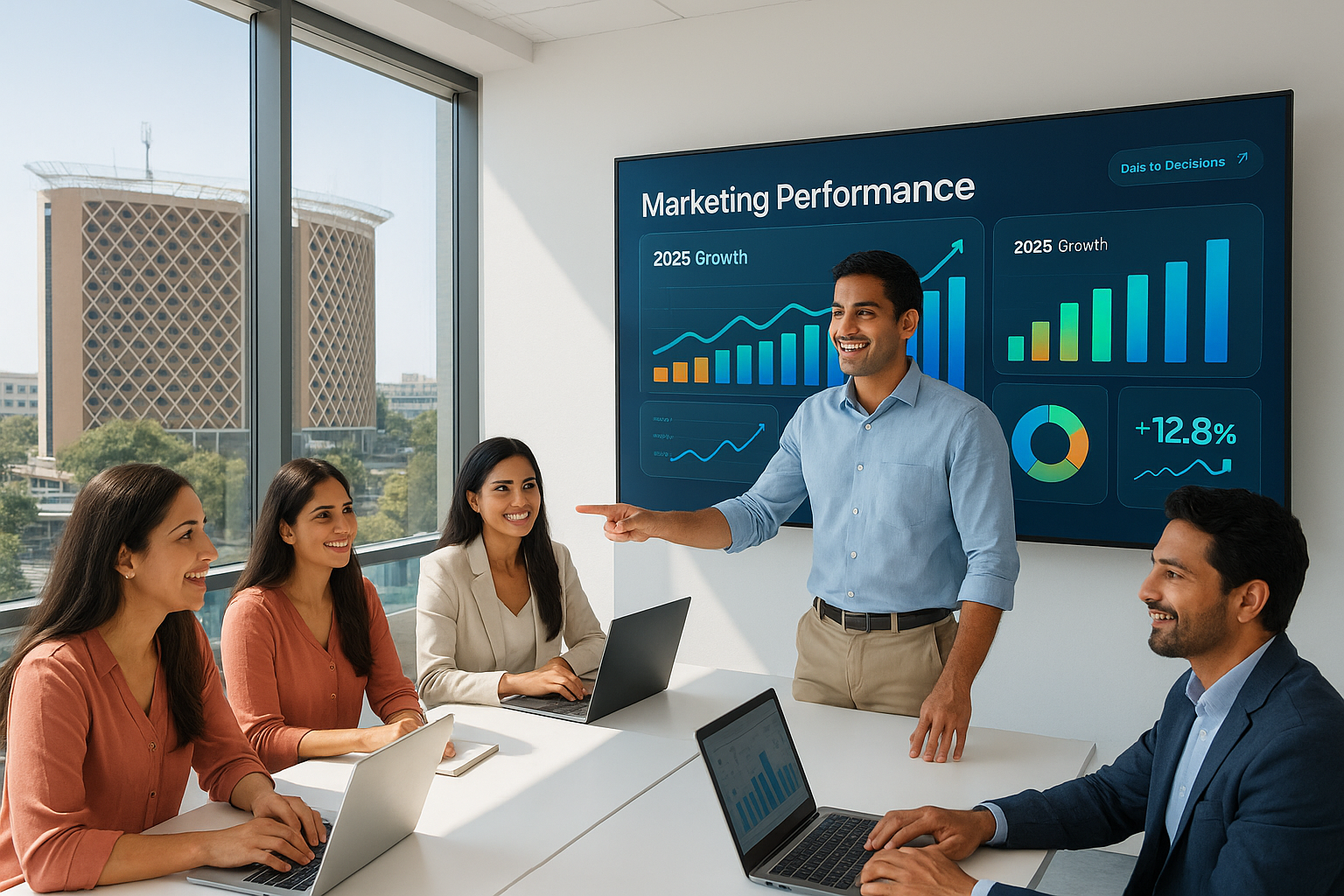
    In 2025, digital marketing is no longer about intuition or guesswork—it’s about precision, clarity, and measurable results. Businesses that thrive are those that can translate data into decisions quickly. This is where marketing performance dashboards in Hyderabad are becoming a game-changer for brands looking to stay competitive.

    Dashboards bring together all your critical marketing metrics—traffic, leads, conversions, ROI—into one easy-to-understand visual hub. Instead of juggling multiple tools and spreadsheets, dashboards give decision-makers a single source of truth, helping them allocate budgets wisely, track campaigns in real time, and identify what’s driving growth.

    Grow Business

    Why Dashboards Are Essential in 2025

    The marketing landscape has evolved rapidly with AI, automation, and hyper-personalization. Traditional reports are too slow and static. Businesses now need:

    • Real-time insights to track campaign performance instantly.
    • Cross-channel integration to see SEO, paid ads, social media, and email results in one place.
    • Predictive intelligence to forecast which campaigns will bring the highest ROI.

    For businesses in Hyderabad—especially SMEs and startups competing in fast-moving industries—dashboards are no longer a luxury but a necessity. The ability to make data-driven decisions means fewer wasted ad spends and more qualified leads entering the funnel.

    Marketing Performance Dashboards in Hyderabad: Local Advantage

    Hyderabad has quickly become a hub for IT, SaaS, and digital-first businesses. With such a competitive environment, marketing performance dashboards in Hyderabad help companies differentiate themselves by:

    1. Benchmarking against regional trends – Dashboards reveal how your business is performing compared to local industry averages.
    2. Tracking localized campaigns – From Google Ads targeting “Hyderabad software companies” to Facebook ads for regional audiences, dashboards help track what’s resonating.
    3. Faster decision-making – Hyderabad’s B2B businesses often deal with global clients. Dashboards cut reporting time and provide instant clarity for executives managing cross-border campaigns.

    This local context makes dashboards not just a reporting tool but a competitive advantage.

    Data-Driven Decision Making in Digital Marketing Hyderabad

    In a city buzzing with tech talent and digital startups, leaders can’t rely on gut feeling alone. They need data driven decision making in digital marketing Hyderabad to survive and scale.

    Here’s how dashboards enable smarter decisions:

    • Budget allocation: Dashboards highlight the campaigns that deliver the best ROI, so marketing leaders can double down on high-performing channels.
    • Lead quality tracking: Beyond lead volume, dashboards show lead sources, conversion rates, and lifetime value, allowing businesses to prioritize channels bringing in the right customers.
    • Performance transparency: Marketing teams and leadership can align better when everyone sees the same numbers—no miscommunication, no hidden data silos.

    This kind of data-driven culture empowers Hyderabad-based companies to pivot quickly, test bold strategies, and respond to market shifts faster than competitors.

    grow business

    Best Tools for Marketing Analytics Dashboards Hyderabad 2025

    With so many tools available, choosing the right one can be overwhelming. The good news is that best tools for marketing analytics dashboards Hyderabad 2025 are now more accessible than ever, offering both affordability and enterprise-grade features. Some leading options include:

    1. Google Looker Studio (formerly Data Studio): Free, flexible, and integrates seamlessly with Google Analytics 4, Google Ads, and BigQuery.
    2. HubSpot Marketing Hub: Ideal for inbound marketers, offering dashboards for email campaigns, lead tracking, and sales alignment.
    3. Power BI by Microsoft: Popular among Hyderabad corporates for its ability to connect with ERP and CRM data.
    4. Tableau: Advanced visualization tool for businesses handling massive amounts of data.
    5. Zoho Analytics: A cost-effective choice for small to medium-sized Hyderabad businesses seeking local support and ease of use.

    Each of these tools offers integrations, AI-powered insights, and customizable reporting features that help marketers in Hyderabad cut through the noise and focus on what matters most.

    The Future of Dashboards: AI + Predictive Analytics

    In 2025, dashboards are moving beyond “what happened” to “what will happen.” AI-powered dashboards can now predict campaign outcomes, suggest optimal posting times, and even forecast lead generation trends. Imagine your dashboard not only telling you that LinkedIn ads generated 100 leads last month, but also predicting that your next campaign will generate 20% more leads if you target specific industries in Hyderabad.

    This predictive edge is what makes dashboards more than just tools—they are decision accelerators.

    Final Thoughts

    In today’s digital-first economy, making fast, confident, and precise decisions separates thriving businesses from those falling behind. For companies in Hyderabad, marketing dashboards bridge the gap between raw data and smart action. They allow leaders to visualize results, optimize campaigns, and confidently plan their next move.

    Whether you’re a startup founder, a marketing manager, or a B2B enterprise executive, investing in marketing performance dashboards in Hyderabad, adopting data driven decision making in digital marketing Hyderabad, and exploring the best tools for marketing analytics dashboards Hyderabad 2025 will put you miles ahead of competitors.

    Dashboards aren’t just about tracking numbers—they’re about driving growth. And in 2025, that growth begins with data-driven decisions.

  • Battling Google Zero: Strategies to Thrive in the Era of AI-Powered Zero-Click Search

    Battling Google Zero: Strategies to Thrive in the Era of AI-Powered Zero-Click Search

    The future of search is shifting faster than marketers imagined. With Google’s Search Generative Experience (SGE) and AI-powered results dominating page one, traditional clicks are disappearing. Welcome to the zero-click search era, where answers are delivered instantly, directly on the search results page. For brands, this is both a threat and an opportunity. The challenge now is clear: how do you build visibility, trust, and conversions when the clicks don’t come?

    This blog explores AI-driven zero click search strategies, how to optimize for Google SGE 2025, and the most effective digital marketing tactics for zero click results that help your brand stay visible, even without the click.

    Grow Business

    Understanding Zero-Click Search in 2025

    A zero-click search happens when users find the answer they need directly on Google—whether through AI snapshots, featured snippets, knowledge panels, or local packs. With SGE, this is amplified. Instead of 10 blue links, users are presented with an AI-curated response, complete with context, summaries, and even transactional recommendations.

    In 2025, Google SGE optimization isn’t optional—it’s the foundation of digital visibility. Marketers who fail to adapt risk being invisible in a landscape where AI answers replace traditional organic traffic.

    AI-Driven Zero Click Search Strategies

    The shift to zero-click doesn’t mean defeat. It means rethinking how you provide value within Google’s ecosystem itself. Here are essential AI-driven zero click search strategies for 2025:

    1. Structured Data Markup

    Use schema markup aggressively. Structured data helps Google’s AI understand your content better, making it more likely to surface in SGE summaries and featured snippets.

    1. Entity-Based Optimization

    Focus on entities, not just keywords. Google’s AI connects topics, brands, and concepts. Building authority around entities positions you as a trusted source for AI-powered answers.

    1. Content Designed for Summaries

    Break content into concise, answer-driven blocks. Lists, bullet points, and definitions feed AI models more effectively, increasing the chances of being pulled into zero-click responses.

    1. Visual Search Adaptation

    With multimodal search growing, optimize visuals with descriptive alt text and structured metadata. This is crucial as SGE integrates text + image results.

    1. Brand Mentions & E-E-A-T

    Google rewards Experience, Expertise, Authoritativeness, and Trustworthiness (E-E-A-T). Consistent brand mentions across the web build trust signals that AI prioritizes in zero-click scenarios.

    These AI-driven zero click search strategies turn visibility into influence—your content becomes part of the conversation even when users don’t land on your website.

    How to Optimize for Google SGE 2025

    If you’re wondering how to optimize for Google SGE 2025, think beyond keywords. Google’s AI doesn’t just parse phrases—it interprets intent, context, and trustworthiness. Here are practical steps:

    1. Optimize for Conversational Queries

    SGE leans heavily on natural language. Anticipate user questions in conversational formats—“What is the best CRM for small businesses?”—and craft content that directly answers them.

    1. Focus on Topical Authority

    Instead of dozens of shallow blogs, build deep topic clusters. For example, if you’re in digital marketing tactics for zero click results, cover every angle—zero-click SEO, AI snippets, brand positioning, and analytics.

    1. Leverage Long-Tail Keywords

    While head terms are competitive, long-tail queries feed directly into AI answers. Optimizing for long-tail questions ensures your content is included in SGE summaries.

    1. Integrate Multimedia & Interactive Content

    Google’s AI favors content that provides depth. Embedding videos, FAQs, and interactive tools helps secure placements in rich zero-click features.

    1. Local & Transactional Optimization

    For local businesses, optimizing Google Business Profiles and reviews is critical. SGE integrates maps, reviews, and transactions directly into the AI snapshot.

    Mastering how to optimize for Google SGE 2025 isn’t about gaming the algorithm—it’s about aligning your digital ecosystem with the way AI interprets authority and trust.

    Digital Marketing Tactics for Zero Click Results

    grow business

    Adapting to this new reality requires holistic thinking. Here are proven digital marketing tactics for zero click results:

    1. Build Brand Demand Off Google

    Relying solely on organic search is risky. Invest in email marketing, LinkedIn thought leadership, and niche communities to create demand independent of search traffic.

    1. Prioritize First-Party Data

    Zero-click search reduces traffic, meaning fewer cookies and less third-party data. Collect emails, leverage CRM strategies, and run account-based marketing (ABM) campaigns to future-proof targeting.

    1. Own the Narrative on Social Media

    When clicks decline, impressions and visibility matter more. Social content reinforces authority and pushes users to search specifically for your brand, bypassing AI-curated answers.

    1. Leverage Influencer & PR Mentions

    Mentions across media outlets and expert citations strengthen E-E-A-T signals. When AI curates results, brands with higher trust win the visibility battle.

    1. Track Zero-Click ROI Metrics

    Don’t just track traffic. Monitor impressions, brand mentions in AI answers, and assisted conversions. These reflect influence in a zero-click landscape.

    Adopting these digital marketing tactics for zero click results ensures you maintain growth even when fewer users reach your website.

    Final Thoughts

    The rise of AI-powered search doesn’t signal the death of SEO—it signals its transformation. Success in 2025 depends on mastering AI-driven zero click search strategies, knowing exactly how to optimize for Google SGE 2025, and deploying digital marketing tactics for zero click results that expand your visibility beyond clicks.

    Marketers who embrace this shift will thrive by turning zero clicks into maximum influence. Those who resist risk fading into the background while Google’s AI delivers answers without them.

  • The Convergence of Branding, Marketing & Design: Creating Unified Digital Experiences

    The Convergence of Branding, Marketing & Design: Creating Unified Digital Experiences

    In 2025, the lines between branding, digital marketing, and web design are no longer separate. Customers don’t see your branding strategy, your marketing campaign, and your website design as individual efforts—they see them as one unified digital experience. That’s why businesses are now focusing on how to integrate branding and digital marketing in 2025, not as separate functions, but as one powerful growth engine.

    The brands that succeed today are those that create seamless customer journeys—where messaging, design, and marketing all speak the same language. Let’s explore how branding, digital marketing, and web design are merging, and how companies can deliver unified digital experiences for customer engagement.

    Grow Business

    How to Integrate Branding and Digital Marketing in 2025

    For years, companies treated branding as visuals and slogans, while digital marketing focused on traffic, clicks, and leads. But in 2025, the most successful businesses know that branding is digital marketing. They work together to build trust, awareness, and conversions.

    Here’s how to integrate branding and digital marketing in 2025 effectively:

    1. Consistent Storytelling Across Channels

    Your brand voice must remain the same on social media, paid ads, email campaigns, and even your customer support chat. Every touchpoint reinforces the brand promise.

    1. AI-Driven Personalization

    Digital marketing now uses AI to target the right audience, but branding ensures the messaging is authentic. When personalization feels human and true to the brand, customers engage more deeply.

    1. Purpose-Driven Campaigns

    Buyers want to connect with values. When your branding strategy defines your “why,” your digital marketing campaigns amplify it to the right audience.

    By integrating branding and digital marketing, businesses don’t just sell—they create long-lasting customer relationships.

    Unified Digital Experiences for Customer Engagement

    Today’s buyer journey isn’t linear. A customer might first see your brand on LinkedIn, then visit your website, sign up for an email, and finally buy after watching a video ad. If these experiences feel disconnected, you lose trust. That’s why businesses are prioritizing unified digital experiences for customer engagement.

    A unified digital experience means:

    • Design + Branding Consistency: Colors, logos, tone, and visuals must look and feel the same everywhere.
    • Seamless User Experience: Moving from ad → website → checkout should feel natural, without friction.
    • Personalized Journeys: Data from your marketing campaigns should inform website recommendations and follow-up emails.

    Companies like HubSpot, Salesforce, and Apple are leading examples of unified digital experiences for customer engagement, showing how powerful consistent branding and marketing can be when tied together with great design.

    Merging Web Design and Branding Strategies

    Your website is the digital home of your brand. It’s not just a brochure—it’s a 24/7 salesperson, brand ambassador, and marketing engine. That’s why merging web design and branding strategies is critical in 2025.

    Here’s how to merge them effectively:

    1. Design Reflects Identity

    Typography, layout, and imagery must represent the brand’s tone. A premium brand won’t use cheap stock photos; a playful brand won’t use corporate gray everywhere.

    1. Conversion-Focused Branding

    Good branding isn’t only about looking good—it must help the business grow. Merging web design and branding strategies means building landing pages that match campaigns, CTAs that reflect the brand promise, and user flows that feel natural.

    1. Mobile-First + Smart Features

    With most traffic coming from mobile, your web design should integrate chatbots, AI recommendations, and interactive features that embody the brand’s personality.

    When web design and branding strategies merge, your site doesn’t just inform—it engages, persuades, and converts.

    Why the Convergence Matters in 2025

    The digital world is crowded. Customers have endless choices. What sets a brand apart isn’t just marketing spend or fancy websites—it’s the ability to deliver a unified experience across branding, marketing, and design.

    • Without integration, your branding feels empty.
    • Without design alignment, your marketing feels disjointed.
    • Without digital marketing, your branding doesn’t scale.

    That’s why in 2025, leaders are asking not “how do I improve my website?” or “how do I run better ads?” but how do I integrate branding, marketing, and design into one powerful strategy?

    Conclusion

    The future of digital growth lies in integration, not separation. Businesses that know how to integrate branding and digital marketing in 2025, while building unified digital experiences for customer engagement, will win. And those who focus on merging web design and branding strategies will create websites that don’t just attract visitors but convert them into loyal customers.

    Branding, marketing, and design are no longer three separate teams—they are one strategy, one message, and one digital experience. That’s the future.


  • AI Mode Changed the SERP—How to Keep Earning Clicks in Google’s AI-First Search

    AI Mode Changed the SERP—How to Keep Earning Clicks in Google’s AI-First Search

    Introduction: The New Era of Search

    Google has officially shifted into AI Mode with the rollout of AI Overviews in its search results. Unlike traditional blue links or even featured snippets, AI Overviews pull together context-rich answers directly in the SERP, powered by Google’s generative AI.

    This shift is exciting for users, but for businesses and marketers, it raises urgent questions: How do you keep earning clicks when Google’s AI provides the answer upfront?

    In this blog, we’ll break down what AI Mode means for your SEO strategy, how to structure content for maximum visibility, and practical steps to measure impact.

    Grow Business

    What Is Google’s “AI Mode”?

    AI Mode, also called AI Overviews, is Google’s attempt to give users instant, conversational responses without requiring multiple clicks. Instead of scanning through ten results, users get an AI-generated answer stitched from multiple authoritative sources.

    This means:

    • Less real estate for organic links.
    • More emphasis on authority and structure.
    • Higher stakes for visibility.

    Put simply, SEO isn’t “dead,” but the battlefield has changed.

    How AI Overviews Reshape Content Strategy

    To adapt, marketers must rethink how content is created, structured, and surfaced. Here’s what changes:

    1. Content Structure Matters More Than Ever
    • Use clear subheadings (H2s, H3s) with direct, concise answers.
    • Add FAQ schema to anticipate AI queries.
    • Write in conversational but authoritative language—AI thrives on content that reads naturally.

    Example: Instead of burying a definition in paragraph three, lead with it.

    1. Snippet Strategy Evolves into “AI Snippet Optimization”
    • Traditional snippets targeted one box; AI Overviews now pull from multiple points.
    • Optimize lists, step-by-step guides, and key takeaways that AI can easily parse.
    • Keep answer paragraphs between 40–60 words to fit into AI response blocks.

    Pro tip: Add a “TL;DR” summary section—AI models often extract summaries for faster retrieval.

    1. On-Page UX Is Now Part of SEO
    • Google’s AI doesn’t just look at words—it looks at user engagement signals.
    • Pages with clean design, fast load times, and clear CTAs are more likely to get clicks even after AI surfaces your answer.
    • Think beyond ranking—how will your page hold a user’s attention once they land?
    Practical Examples

    Let’s see how this works across industries:

    • B2B SaaS: A “What is workflow automation?” blog should lead with a 50-word summary, then expand with case studies.
    • Healthcare: A “Best diets for diabetes” article should feature a bulleted summary table upfront.
    • E-commerce: A “How to choose running shoes” guide should include comparison tables and checklists.

    These content-first layouts ensure your site becomes the source AI Overviews cite.

    Azure Business Continuity with Site Recovery

    Measurement Plan: How to Track Success in AI Search

    The challenge? Google Search Console currently provides limited visibility into AI Overview performance. But you can still measure impact with these steps:

    1. CTR Shifts in GSC: Track whether impressions hold steady while CTR drops—this signals AI Overviews are intercepting clicks.
    2. Engagement Metrics: Monitor time on page, scroll depth, and bounce rate via GA4. If AI summaries drive visitors, their intent will be sharper.
    3. Ranking Positions: Continue monitoring traditional SERP rankings—you’ll still compete for visibility even if clicks shift.
    4. Experiment with Content Formats: Compare CTRs between structured “answer-first” content vs. long-form storytelling.

    Over time, you’ll see which formats AI prefers to surface.

    Action Plan: Staying Ahead in an AI-First Search World

    Here’s a simple roadmap:

    1. Audit Your Existing Content:Identify high-traffic pages and restructure them with concise definitions, lists, and FAQs.
    2. Implement Schema Markup: Use FAQ, How-To, and Product schema to boost chances of inclusion in AI Overviews.
    3. Diversify Traffic Sources: Don’t rely solely on organic. Explore LinkedIn thought leadership, email marketing, and webinars to fill gaps.
    4. Test & Iterate: Use A/B testing to compare performance of structured vs. traditional content layouts.

    Conclusion

    Google’s AI Mode is not the death of SEO—it’s the evolution of it. The winners will be brands that adapt content for machine readability while still delivering value to humans.

    If your pages can answer quickly, engage deeply, and guide users to the next step, you’ll keep earning clicks—even in an AI-first SERP.

    Final takeaway

    Treat AI Overviews not as competition, but as a new distribution channel. Your job is to ensure your content is the one Google’s AI trusts.